
5 Ways to Live Well With Chronic Pain and Illness

None of us ever set out to live a life with chronic pain and illness, but it happens. There comes that moment when you are sitting in yet another doctor’s office going over your symptoms for the third time that week, and the physician is simultaneously squinting his eyes, trying to make sense of your laundry list of complaints while scribbling something in your file — when you realize that your story might not ever have a Cinderella ending.

You panic.

You may throw things (when you get home).

Niagara Falls begins to erupt from your eyes.

And then gradually, over time and much heartache, you embrace Plan B.

My Plan B was immersing myself into the wisdom of Toni Bernhard’s writing on the topic of chronic illness. In my opinion, there’s no one who understands the frustrations of being unfairly stymied in your life by an illness as well as Bernhard, but who offers a hopeful perspective without charging you with a bunch of actions that promises a “cure” like so many other self-help books do. Bernhard, a former law professor and dean of students at the University of California-Davis, caught a viral infection in May of 2001 on a trip to Paris and has been mostly housebound — often bedbound — since.
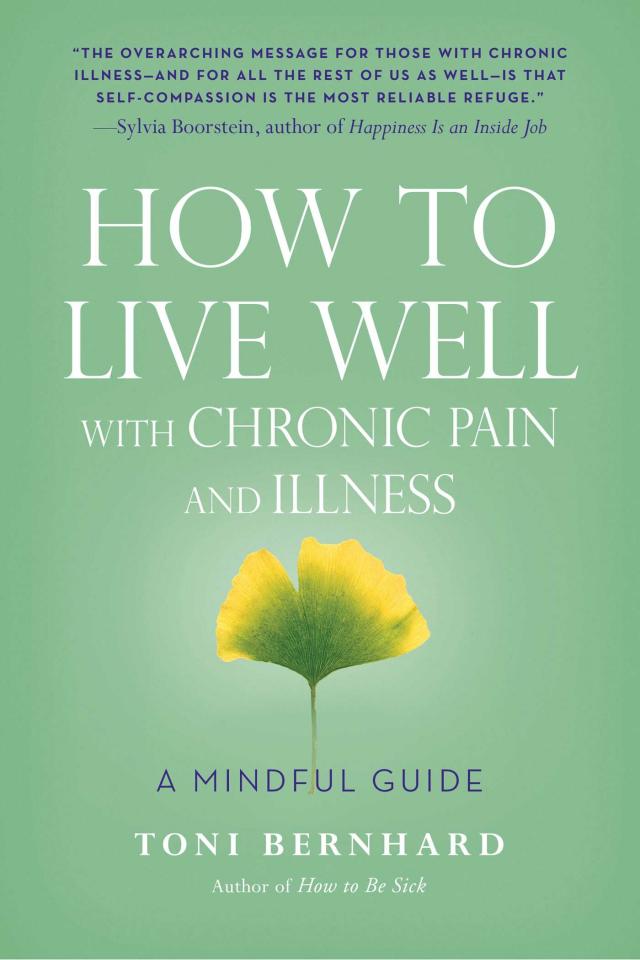
How to Live Well

I read her first book, How To Be Sick, at a critical time in my recovery a year-and-a-half ago when I decided to start living around my symptoms instead of fighting against them on an hourly basis. Her insights have led me to peace, and helped me to embrace my illness in a way that has substantially reduced my suffering. Now, she has just published a new book, How to Live Well With Chronic Pain and Illness. Like her first book, it’s packed full of helpful advice, including skills to help with every day, how to communicate with family and friends, managing toxic thoughts and emotions, and dealing with isolation and loneliness.

Here are just a few favorite insights of mine that she offers in her book to help you live better with chronic pain and illness.

1. Be Kind to Yourself

One of my favorite chapters in Bernhard’s book is called “Letting Go: A Not-To-Do List for the Chronically Ill,” in which she compiles a fantastic list of eight things not to do:

  • Do not spend your precious energy worrying about how others view your medical condition.
  • Do not treat discouraging and disheartening thoughts or emotions as permanent fixtures in your mind.
  • Do not ignore your body’s pleas to say “no” to an activity.
  • Do not undertake a treatment just to please whoever is pressuring you to try it.
  • Do not be angry when people in your life don’t respond as you’d like.
  • Do not get hooked into believing you always have to “think positively.”
  • Do not put your pre-illness life on a pedestal.
  • Do not call yourself names or otherwise speak unkindly to yourself when you break one of your not-to-do rules.

They are all ways of learning how to be kind to yourself, which Bernhard would say is the most important lesson of all. “Self-compassion always comes first,” she writes. “If you think that treating yourself with compassion is too self-absorbed, remind yourself of the Buddha’s words: ‘If you search the whole world over, you will find no one who is dearer than yourself.’” We so often associate the word “kindness” with our actions to others, but it’s equally important to treat ourselves with respect and compassion.

2. Ask for Help

We’ve been taught that asking for help is a sign of weakness. In our culture, independence is valued over dependence. Learning how to ask for help takes practice for many of us. It’s a skill. Bernhard outlines some steps to hone this skill, and she reminds us that asking for help can actually be an act of kindness toward others. She writes, “Allowing them to help when you’re struggling with your health makes them feel LESS HELPLESS in the face of the new challenge in your life. It can mean a lot to someone to be able to aid a friend or family member who is struggling with his or her health.”

3. Learn How to Say ‘No’

This lesson has been one of the most difficult ones for me as a stage-four people-pleaser. Whenever I summoned up the courage to say “no” as a young girl, I endured silent treatments and other fun stuff. Going into my second decade with a chronic illness, however, I have no choice but to utter the two-letter word with regularity. That is, if I want to reduce my symptoms as much as possible. In responding to other people, Bernhard relies on Buddha’s teaching on skillful speech — we should speak only when what we have to say is true, kind, and helpful. So when someone asks her to do something, she asks herself, “Would saying ‘no’ as opposed to ‘yes’ betrue to myself? Would saying ‘no’ as opposed to ‘yes’ be kind and helpful to myself?” Think about this the next time you are asked to do something: Will your response be true to yourself, reflect your values, and EASE your suffering, as opposed to intensifying it? Or are you responding out of social pressure and a pattern of people-pleasing? Bernhard says it gets easier to say “no” as you begin to do it more often.

4. Don’t Feed the Want Monster

“Our desire to satisfy the Want Monster can feel so intense that we can talk ourselves into believing that getting what we want is necessary to our very ability to be happy,” writes Bernhard. For a long time, my deepest desire was to regain the good health that I enjoyed in my 20s. I could eat pizza and ice cream without suffering painful consequences. I enjoyed hosting parties with my husband. I didn’t have to keep a mood journal and assign each day a number between 0 (no death thoughts) and 5 (worrisome suicidal ideations), along with the day in my menstrual cycle, medications and supplements taken, and food and beverages consumed. These two lines in Bernhard’s book enlightened me on how much energy I was wasting on trying to get back to my 27-year-old self: “The type of happiness that comes from satisfying the Want Monster is short-lived — because nothing is permanent … This conviction that the key to happiness is satisfying our desires sets us up for a big dose of disappointment and dissatisfaction with our lives.” After falling into that trap herself, she now realizes that the happiness that she wants comes from being content with her life as it is — and that is very attainable. She writes:

This happiness comes from making peace with the stark realities of life — that it’s a mixture of pleasant and unpleasant experiences, easy times and hard times, getting what I want and not getting what I want. It’s that way for everyone, and has always been. This happiness comes from opening my heart and mind to engage each day fully, even though I know it may be a day in which the Want Monster goes hungry.

5. Practice Mindfulness

Mindfulness is the practice of turning your attention with care to the experience of the moment,” Bernhard explains. Her chapters teach us how to apply mindfulness to our illness — that is, how to pay attention to our physical and mental discomfort in a way that brings us to peace with our lives as they are at the moment. This can be done inside or outside the practice of formal meditation. It is about responding skillfully to emotions that can hijack our mind and identifying stressful thought patterns that can so often trigger physical reactions in the body. With practice, we can learn to catch the stories we tell ourselves that work against our well-being and mindfully let them go. Bernhard writes:

It took several years of chronic illness for me to recognize that I was causing myself undue mental suffering by spinning stressful stories about my physical discomfort and then accepting them as true without question simply because I had thought them. Mindfulness practice was the principle too that helped me realize was I was doing.

Posted in News & updates | 2 Comments

4 Ways to Face Fears and Overcome Phobias

Halloween is a time when we have fun with the feeling of being afraid, so I thought I’d write about our fears, phobias, anxieties — things that shorten our breath, quicken our heartbeats, and sometimes outright disable us.

Some of us shut our eyes and hold our breath as we ride the elevator to the 10th floor of an office building, while others pray the Rosary inside that coffin-like enclosure when getting an MRI. I am afraid of heights — in particular driving over the Chesapeake Bay Bridge. It doesn’t look all that menacing, but the structure spans more than 4.3 miles and is 200 feet high in places.

I’m obviously not alone with my jitters. Two years ago, Inside Edition did a story on it, calling it quite possibly the scariest bridge in the world. It was also on Travel + Leisure’s list of the 10 scariest bridges in the world — the only other two American bridges being the Mackinac Straits Bridge between Mackinaw City and St. Ignace, Michigan, and the Royal Gorge Bridge in Cañon City, Colorado.

The Bay Bridge connects Maryland’s eastern and western shores (Annapolis is on the western shore), so kids’ sporting events on the eastern shore present a real problem for a mom with gephyrophobia (fear of crossing bridges — yes, there’s a word for us!). Usually, I make my husband take off work to drive Katherine or David across the bridge. But the other night he was out of town, so I was forced to face my fear, which is usually the way phobias are addressed.

My strategy was to follow these four steps, which, once I was on the other side of the bridge, I realized actually apply to everything we don’t want to do, and to living with depression in general.

1. Focus on the Yellow Lines (or What’s Right in Front of You)

This is true of so many things — if we can keep our view on just what is in front of us, instead of the really high span a mile ahead, we have a better shot at staying calm.

Ironically, when I swam UNDER the bridge — where many people freak out because, in some places, you’re swimming in 174-foot deep water — someone told me to count the concrete structures along the way and never try to gauge how far it is to the other side.

It was sage advice. Whenever I looked up and tried to figure out how far it was to the shore, my breath became labored and swimming became much more difficult. But if I concentrated on counting my strokes and the structures, I made better time, and I forgot that I was a mile away from land on each side.

When I’m driving over the bridge, I do much better when I kept my gaze down at the yellow lines.

This is also true if you are in the midst of a depressive episode. In that case, the yellow lines are 15-minutes segments of time, and I tell people to take it 15 minutes at a time, no more.

2. Keep Your Cheerleaders Nearby

Conquering your fear is much easier when you have cheerleaders to accompany you. This is true when you challenge yourself in any regard, from running a 5K to giving a talk at an event.

I remember the time when a friend couldn’t get into a skyscraper elevator in New York City until my sister offered to ride up with her.

“Mom, this is not that big a deal,” my son reminded me as we paid the $4 toll to get across the bridge.

Of course, the cheerleaders can also distract you, which is a plus; on the way back, my kids were fighting over a Chick-Fil-A milkshake, grabbing it out of each other’s hands just as we reached the highest part of the bridge. My attention turned from the little yellow lines to screaming, “Stop it already! Can’t you see Mom’s not having fun?!”

3. Watch Your Breath

In addition to counting the yellow lines, I practiced a modified Pranayama, the first breathing exercise of Bikram yoga, while crossing the bridge. Obviously, my hands were on the steering wheel and I couldn’t throw my head back, but I inhaled to a count of six breathing in through my nose, and then exhaled to a count of six breathing through out my mouth.

When you breathe deeply, you stimulate your vagus nerve, which extends from your medulla oblongata, located in the brain stem, to the stomach. This long nerve links your central nervous system and your peripheral nervous system. It is often considered a bridge between between our conscious minds (“I am driving across a really high bridge”) and subconscious minds (“I’ll never be able to overcome my fears”).

By stimulating the vagus nerve and the parasympathetic nervous system, we release anti-stress enzymes and hormones, such as acetylcholine, prolactin, vasopressin, and oxytocin.

The first thing that happens when we panic is that our breath grows shallow and the loss of oxygen sends an alarm throughout our body that we are in harm’s way, which further paralyzes our thoughts and our biological systems. Stopping this reaction as it is happening is much more difficult than keeping it from happening to begin with, so it’s best to slow your breath from the beginning when you’re in a fearful situation, and make sure you keep it at a deliberate, measured pace until you’re on dry land or out of the elevator.

4. Apply Some Humor

I was very glad that a friend asked me to watch Bob Newhart’s video Stop It last week before I attempted the bridge drive. I apologize in advance if anyone finds the video offensive, but for those of us who have endured some really bad therapy sessions and have fears that make absolutely no sense, it is welcome comic relief.

A woman who comes to see Newhart’s character, Dr. Robert Hartley, PhD, for therapy is afraid she is going to be buried alive in a box, and Bob simply says, “STOP IT!”

She goes on to say she has bad relationships with men, is bulimic (I realize this is sensitive, but I also had an eating disorder and I appreciated the humor), and a list of other things, and all he says is “STOP IT!”

At the highest point of the bridge, I did begin to panic a little and feared that I was going to have a bona fide panic attack.

“What if I can no longer control my foot and I accidentally hit the accelerator, smashing us into this truck in front of us, and we go over the side,” I thought to myself. “Maybe I should open all the windows now so the kids and I can climb out, because the weight of the water will make it impossible for me to punch through the glass …” The ruminations were just beginning when I said to myself, “STOP IT!” and laughed, remembering the video. “This is insane. Just STOP IT!”

Posted in News & updates | 2 Comments

10 Fall Foods I Eat to Improve My Mood

For many people, the beginning of autumn triggers anxiety with its shorter days, reduced sunlight, changes in schedules, and allergies. Fortunately there are many foods and spices during this season that can help us to stay emotionally resilient and boost our mood. Enjoy the following foods as the leaves begin to fall and the temperature cools. They contain the right mix of nutrients to help keep you calm.

1. Pumpkin Seeds

Pumpkin seeds are one of Mother Nature’s most potent mood boosters. They’re chock-full of zinc (containing 23 percent of our daily recommended value in just one ounce), which Emily Deans, MD, calls an “essential mineral for resiliency” in her Psychology Today blog Zinc: An Antidepressant. The mineral also increases our ability to fight off inflammation, which can cause depression and anxiety. In addition, it’s rich in magnesium, our calming nutrient: According to a 2012 study in the journal Neuropharmacology, magnesium deficiencies induce anxiety, which is why the mineral is known as the original chill pill.

2. Squash

Squash was already one of my favorite fall foods before I knew it was packed full of mood-boosting ingredients. Just one cup of butternut squash contains 15 percent of the daily recommended value of magnesium, 17 percent of potassium, and 18 percent of manganese — all critical minerals to keep you sane. One cup also contains a whopping 52 percent of vitamin C, which gives a helping hand to our immune system and to our entire central nervous system.

3. Cinnamon

Cinnamon was used as early as 2000 BC in ancient Egypt to treat a host of different health conditions. A study at Wheeling Jesuit University in Wheeling, West Virginia, showed that even smelling cinnamon enhanced cognitive performance. The spice is especially good for anxiety and depression because it helps regulate blood sugar. And one teaspoon provides 22 percent of the daily recommended value ofmanganese, a critical trace mineral that helps with nerve function and connective tissues, aiding the central nervous system in general. In addition, it plays a role in neutralizing free radicals that can damage cell membranes and DNA.

4. Turkey

If you’re fretting about all the family drama that happens at Thanksgiving, rest assured that the turkey will be helping you stay sane. It’s a good source of the amino acid tryptophan, which helps your body produce the feel-good chemical serotonin.

5. Turmeric

I throw the spice turmeric into the fall foods category because I start experimenting with it once the weather turns cool. This yellow spice that we eat in different kinds of curry contains a natural anti-inflammatory agent, curcumin, that helps mitigate depression and anxiety. The abstract from a 2014 study in the Journal of Affective Disorders reads:

Curcumin, the principal curcuminoid derived from the spice turmeric, influences several biological mechanisms associated with major depression, namely those associated with monoaminergic activity, immune-inflammatory and oxidative and nitrosative stress pathways, hypothalamus-pituitary-adrenal (HPA) axis activity and neuroprogression. We hypothesised that curcumin would be effective for the treatment of depressive symptoms in individuals with major depressive disorder.

6. Apples

As I mentioned in my blog 10 Foods I Eat Every Day to Beat Depression, apples are high in antioxidants, which can help to prevent and repair oxidative damage and inflammation on the cellular level. They’re also full of soluble fiber , which balances blood sugar swings. One of my favorite fall snacks is some almond butter on apple slices, so I get my omega-3 fatty acids along with some fiber.

7. Eggplant

In addition to being a good source of fiber, copper, vitamin B1, and manganese,eggplant also contains important phytonutrients, including phenolic compounds and flavonoids, that are potent antioxidants. One study found that anthocyanin phytonutrients in the skin of eggplants, called nasunin, protects brain cell membranes from damage by zapping free radicals and guarding the lipids (fats) in brain cell membranes.

8. Sweet Potato

Just one baked sweet potato provides 214 percent of our daily recommended value of vitamin A (an antioxidant superpower), 52 percent of our vitamin C, and 50 percent of our manganese. This healthy starch is also full of copper, pantothenic acid, vitamin B6, biotin, and potassium — all very helpful in fighting depression and anxiety. Sweet potatoes contain anthocyanin pigments and other flavonoids that have been shown in studies to have strong anti-inflammatory and antimicrobial activities. According to one study published in the Journal of Biomedicine and Biotechnology:

Because of their diverse physiological activities, the consumption of anthocyanins may play a significant role in preventing lifestyle-related diseases such as cancer, diabetes, and cardiovascular and neurological diseases.

9. Chamomile Tea

Chamomile is one of the most ancient medicinal herbs and has been used to treat a variety of conditions including panic and insomnia. Its sedative effects may be due to the flavonoid apigenin that binds to benzodiazepine receptors in the brain. Chamomile extracts exhibit benzodiazepine-like hypnotic activity as evidenced in astudy with sleep-disturbed rats. In a study at the University of Pennsylvania Medical Center in Philadelphia, patients with generalized anxiety disorder (GAD) who took chamomile supplements for eight weeks had a significant decrease in anxiety symptoms compared to the patients taking placebos.

10. Bananas

Bananas are rich in potassium, which aids mood. A 2008 study published in the British Journal of Nutrition found that a high-potassium diet helped relieve symptoms of depression and tension in participants. It’s an important electrolyte that regulates blood pressure and PH balance. Bananas also contain tryptophan, which increases brain serotonin and, according to some studies, can be an antidepressant for mild-to-moderate depression. The vitamin B6 in bananas helps convert the tryptophan into serotonin while soothing your nervous system. Bananas also have melatonin, which aids sleep and regulates our body’s natural rhythms, as well as iron, which can help fight fatigue.

Posted in News & updates | Leave a comment

9 Ways to Avoid Emotional Eating During the Holidays

For anyone with an inclination to use food as comfort — which basically includes us all — the two months between Halloween and the New Year provide one temptation after another. For me, it starts the hour the trick-or-treaters have left and I assess the supply of Tootsie Rolls, Kit Kats, and Reese’s Peanut Butter Cups that didn’t make it into the pillow cases or plastic pumpkins of our guests. I tell myself that they’re absolutely off-limits as I climb up on the kitchen counter to hide them in a place that requires much physical effort to get to. Then come all the holiday festivities whereeverything I’m not supposed to be eating and drinking (sugar, gluten, dairy, alcohol) is there, available, in my face, taunting me … “Come on, you know you want me … I can make you feel better.”

For many of us, the holidays are filled with stress, and the easiest, safest, most affordable place to relieve that stress is in a plate of mashed potatoes or pumpkin bread, a box of Christmas cookies, and lots and lots of red wine. I always think about the scene from Mall Cop when emotional eater Paul Blart (Kevin James) is spreading peanut butter on his bread, saying “Pain, go away.” But for many of us, the more we give in to the patterns of emotional eating, the deeper our pain gets, especially for those of us who are intolerant to sugar, gluten, dairy, and alcohol — which is a high percentage of people who struggle with chronic depression and anxiety.

But if you’re prepared with some action items, it’s possible to not get trapped into emotional eating even during the holidays. Here are a few ways you can avoid turning to food for comfort and exercise discipline during this self-indulgent season of the year.

1. Nibble on Dark Chocolate in the Morning

When I was newly sober, my sponsor told me to eat chocolate or enjoy a chocolate milkshake whenever I had a craving to drink. She was mostly right. Since sugar can often cancel out the beneficial properties of this food, it’s best to aim for dark chocolate that’s at least 85 percent cocoa or higher. Dark chocolate often satiates the urge to engage in addictive behavior for a few reasons: First, it has one of the highest concentrations of magnesium in a food, with one square providing 327 milligrams (mg), or 82 percent, of your daily value — and magnesium is our calming friend. According to a 2012 study in the journal Neuropharmacology, magnesium deficiencies induce anxiety, which is why the mineral is known as the original chill pill.

Dark chocolate also contains large amounts of tryptophan, an amino acid that works as a precursor to serotonin, and theobromine, another mood-elevating compound. I find that eating a few squares of Lindt’s 90% Cocoa Excellence bar a day — oftentimes in the morning — quiets my impulse to binge the rest of the day on sweet breads and chips, and the Reese’s cups up above the kitchen cupboards are terrible for my mood. Maybe this is related to research from Tel Aviv University that shows that including dessert as part of a balanced 600-calorie breakfast full of protein and carbs could help dieters lose weight and keep it off.

2. Keep a Supply of Safe Comfort Food

Dark chocolate is one of my safe comfort foods. Four squares of my 90% cocoa Lindt bar is a serving, so I allow myself to have four most days — especially during the eating season of November and December. In order to keep your hands away from problem foods, it’s best to have a supply of comfort foods that you can eat. Here are some others of mine:

  • Sparkling water. When I put a lemon in it, it’s pretty close to qualifying as a party beverage, and unlike alcohol or Coke or even Diet Coke, I can safely consume bottles of it if I need to binge on something.
  • Lactose-free kefir. Sounds lame, I know, but it’s rich and creamy, and is the only dairy item that doesn’t make me depressed, constipated, or bloated. Plus, the kind I drink (Green Valley Organics) is loaded with probiotics — 10 live and active cultures — so it supplies me with good bacteria for my gut, which in turn helps my mood.
  • Pumpkin seeds. They’re full of zinc (a natural antidepressant), magnesium (our calming friend), manganese, and plant-based omega-3 fats. According to bestselling author Joseph Mercola, DO, pumpkin seeds are nutritional powerhouses and can curb the urge to fill up on junk.

3. Bring Your Own Food to Parties

If you’re invited to a party where you know there’s going to be a spread of foods that you want to binge on, prepare a dish ahead of time that you know you can eat — and eat a lot of. For example, recently I knew we were going to this party where I would be tempted to gorge on a coconut cake that my friend was making. It’s my weakness. So I made a really delicious kale salad (with the right ingredients, it doesn’t taste like something nutritious!) and filled my plate with it. I also took a bottle of sparkling water in case my friend didn’t have any non-alcoholic beverages, and a bar of dark chocolate. I did binge on the kale, sparkling water, and dark chocolate, but managed to control myself from inhaling the other items that were telling me that they could take my pain away — like the coconut cake.

4. Keep a Food Journal

Keeping a food journal seems like a lot of work, but it’s going to help you in several ways. First, it makes you accountable. Ever since I started to record everything I eat, I’ve been much more aware of what I put in my body. As I’m grabbing for a few sips of my daughter’s chocolate milkshake, I’m thinking about the journal and how I’ll have to record what is about to go in my mouth. It also helps you connect the dots between your diet and your mood. That’s how I realized that sugar, more than anything other ingredient, was causing my mood swings. For two or three days after a slip, depression revisited, so I knew there was a cause and effect between the food and my negative ruminations.

Finally, it’s not a bad idea to leave some room in your food journal to write about your thoughts. Journaling has been proven as an effective, inexpensive form of stress relief. Oftentimes, when we record our thoughts, it gives us an opportunity to assess them and to let them go. For 20 years, James W. Pennebaker, PhD, professor of psychology at the University of Texas in Austin has been studying the effects of journal writing. “When people are given the opportunity to write about emotional upheavals, they often experience improved health,” Dr. Pennebaker says. “They go to the doctor less. They have changes in immune function. If they are first-year college students, their grades tend to go up. People will tell us months afterward that it’s been a very beneficial experience for them.”

5. Sit Down When You Eat and CHEW Your Food

One of the reasons that French people don’t get fat, according to a Cornell study, is that they can better gauge when they are full; they use internal cues (“I’m no longer hungry”) to know when to stop eating, unlike Americans who stuff their faces while watching TV or graze all day long, never sitting down for an official meal. The French may eat baguettes and brie, croissants and butter, and all the other forbidden foods, but they enjoy them at a table, their butts on a chair, with friends or family. They also chew and savor their food, which allows for better digestion — and an earlier signal of when to stop bringing the fork to the mouth. Next time you’re tempted to eat something standing up — in transition here or there — stop. Instead, put the food on a plate and take it over to a table, being mindful of the experience of eating.

6. Distract Yourself

Like any addiction, distraction is often the best antidote for emotional eating. Let’s say you’re in the kitchen right after your neighbor has just dropped off a batch of Christmas cookies. GET THE HELL OUT OF THERE. Sorry, but if sugar is as addictiveto you as it is to me, and makes you feel as horrible as it does me, you can’t put yourself in danger like that — not during the holidays when there’s already enough to drag you down. So go to another room and start surfing stupid YouTube videos, like this great version of the 12 Days to Christmas or the Classics of Saturday Night Live. Begin a trashy novel or do some other mindless activity that will allow you to forget about the cookies for a while, until you can reenter the kitchen with a little more resolve.

7. Find Another Comfort Item or Activity

Food is a perfect comfort activity because it’s so easy, and its effects are immediate.Ben & Jerry’s gives us a carbohydrate high by the time we dig into the pint for our second bite. But if we can swap that behavior for another comfort activity, we can train our brain to go somewhere else for comfort. Other possibilities: yoga, exercise, journaling, reading spiritual literature, meditation, online support groups, and twelve-step meetings. Going on a nature walk is almost as easy as opening the fridge, and according to research, it reduces ruminations and boosts feelings of well-being. Developing a regular yoga practice in the last two months has definitely helped me control my addictive tendencies. Other people I know swear by swimming or running. And others opt for meditation.

8. Get an Emotional Eating Buddy

You might not need a support group to rein in your urge to binge. Maybe you just need to talk to someone else who struggles with the same, especially during the holidays — someone to email when you feel the urge to deal with some upcoming stress by stuffing your face with everything in your pantry with an okay expiration date. You probably know of someone. If you don’t, you might want to check outProjectBeyondBlue and look for someone who speaks your language, a fellow foodie with whom you can exchange messages to keep you accountable and give you some support.

9. Weigh Yourself Every Morning

I know this step seems cruel, especially in November and December. But it’s about accountability — like recording everything you eat into a journal. A 2014 study inHealth Psychology led by Jessica LaRose, PhD, an assistant professor of social and behavioral health at Virginia Commonwealth University School of Medicine in Richmond, found that the overweight or obese adults who weighed themselves every day over the course of 18 months lost more weight, on average, than those who didn’t. The researchers found no increase of disordered eating among the group that checked their weight every day. Regular feedback contributed to a sense of continued awareness and self-reinforcement, which further promoted behavioral changes.

Posted in News & updates | Leave a comment

Are You Depressed, Bipolar, or Just Human?

Ten years ago, when I was first diagnosed with bipolar disorder, I was working with a psychiatrist who wanted me to alert him at the first hint of a creative thought. Whether it was an article idea or, God forbid, a concept for a book — any scribbling into a notebook, because that was surely an indication that I was experiencing hypomania and needed a higher dose or a different kind of antipsychotic — he wanted for me to get in touch. He put the fear of God into me that any sign of life in my comatose brain or body meant that I was spiking before crashing into a debilitating depression.

Even after I left him to work with a much more skilled physician, I had this paranoia about feeling good: “Am I hypomanic?” I would ask my psychiatrist. “I don’t want to die today, which clearly means I’m hypomanic, right?” Every emotion and response to life’s events became a symptom. I categorized all crying sessions as “depression,” and filed any type of excitement or energy under “mania.” The terrain between the two, or what we consider “normal,” was a thin thread of land that I visited as often as the Gaza Strip.

cover copy_edited-1 copyBut we really should widen our concept of “normal” — challenge ourselves to see our responses, temperaments, and our very selves as more US than illness — explains mental health expert John McManamy in his new book, Not Just Up and Down: Understanding Mood in Bipolar Disorder, the first of aBipolar Expert Series. He writes:

I had no idea when I began this book of the emphasis I would give to “normal.” Once I got several chapters in, though, it became clear I needed to regard normal as a mood episode unto itself, as worthy of our respect as depression and mania and hypomania and anxiety. This was one of those Newton-under-the-apple tree moments for me. From there, “normal” literally took over the book.

If our “normal” fails us, our depressions and manias and anxieties are sure to follow suit. Or, looking at it from a slightly different perspective, if our normal is too fragile, depression and mania and anxiety are going to come crashing through the door. This is where the Socratic injunction to “know thyself” acquires a new sense of urgency.

I’ve known McManamy personally, and have respected his work, for 10 years. We were among the first mental-health bloggers out there going public with our stories, and possibly the only two people at the time who were interjecting a sense of humor into this often somber subject matter. In his past writings and with this book, he has done a masterful job of helping people become experts on their illness and educating them about the history of psychiatry — especially the development of diagnoses included in all versions of the Diagnostic and Statistical Manual of Mental Disorders — so that they can be well-informed participants in their recovery and not be afraid to think for themselves. “My goal in this book is to help make you an expert patient,” he writes in the first chapter, because “patients who take the lead in learning about their illness and in managing their own recovery fare far better than those who simply wait for things to happen.”

McManamy is a perfect guide to help others navigate the messy terrain of bipolar disorder, because not only does he suffer from the illness himself, he also has a wealth of knowledge tucked away in his noggin. He’s studied virtually every classic text on psychiatry and mood disorders — quoting a variety of experts dating back to Hippocrates — and has attended (and sometimes presented at) practically every conference held by the American Psychiatric Association and other professional psychiatric organizations.

All of the chapters contain entertaining anecdotes, interesting studies, and sound advice, but I especially loved what he had to say about “normal,” because going there is brave: What we know is extremely muddled, unclear, and confusing. As McManamy rightly points out, our neat diagnoses confer on us a sense of absolution: “It was my depression that kept me from remembering your birthday, it wasn’t me!” or “My mania took over when I hit on your girlfriend, it’s not my fault!” We see our depression and mania as entities apart from ourselves, even giving them names like “black dog” (Winston Churchill). A sense of detachment benefits us. McManamy writes:

“Normal” doesn’t let us off the hook so easily. It’s personal, it’s painful. We have to come to terms with ourselves. In the long run, though, our enquiry is the source of our salvation. Normal, as we have seen, can be an extremely frightening place. But it is also the repository of all that is good inside us, together with all our hopes and dreams.

I appreciate his insights right now, because I’m starting to reevaluate some of the beliefs I’ve held about my illness for 25 years … like maybe several of those moments I categorized as “depressed” or “manic” were just me. I am a deep thinkerwho tends to reflect (okay, obsess) on the suffering of the world. Maybe that’s my “normal” and not all “illness.” My playfulness is also who I am, not necessarily hypomania.

McManamy’s words made me think about a conversation I had with a friend in 2012.

My husband didn’t have any work at the time. I was working full-time as a government consultant. And both of my kids weren’t sleeping, which then led to a case of terrible insomnia for me. We were in family therapy, which seemed to be making things worse. I was on so much lithium that I was visibly shaking at work meetings and swim practices, which would provoke some really stupid and hurtful questions about my health from people.

“I just want so badly to die,” I said to my friend. “I don’t understand why God won’t allow me to die. Or at least help me find a medication that works.”

“No offense,” he told me, “but anyone in your position would want to kill herself. What you’re feeling is perfectly normal.”

NORMAL.

Huh.

Maybe not normal for a resilient, well-adjusted person who can roll with life’s punches. But for an extremely sensitive person who needs sleep, a job where she feels like she’s making a difference, and a sense of stability at home? Yeah, maybe my response was normal.

McManamy adeptly illustrates the mistake we often make with assigning our temperament to a diagnosis with this example:

Two women are dancing on tables. It’s not the dancing on tables that is at issue – it’s who is dancing on tables. One is Marilyn Monroe. The other is your stereotypical librarian. Marilyn is obviously just being Marilyn. It’s the librarian we have to worry about. Then again, she may be fine.

Throughout the book, he demands that his readers get to know themselves, to evaluate their history of symptoms and life circumstances, and to navel-gaze a bit and explore themselves as if they were a foreign country for which they desire a visa. That knowledge, he asserts, is going to help you expand the time you spend in the normal Gaza Strip of your life, and better manage your episodes in the seas ofdepression and mania that border. Normal is what we’ve striving for, and ironically, we might be there more often than we think we are. Writes McManamy:

Normal is the true starting point in our journey to know thyself, as well as the final destination. In normal, we find our sense of home, as well as our sense of coming home. In one sense, our journey never ends. In another, we’ve already arrived, even if we don’t know it yet. Welcome to normal. Welcome home.

Posted in News & updates | Leave a comment

7 Ways to Deal With Difficult People

Difficult people are like the termites of the human spirit. They can be eating away at the tender parts of you for months on end before you notice, and then, suddenly, at a work meeting or a family dinner, you lose it. You might scream something unkind or have a temper tantrum much like the two-year-old on Nanny 911, or even do something drastic like start binge drinking again after a few years of sobriety. Unfortunately, living on earth as a homo sapien requires dealing with other homo sapiens — unless you want to isolate yourself and watch Dr. Phil all day long. So having some techniques in mind, especially during the holidays and other times of vulnerability, can help you arrest their damage before your structure crumbles.

1. Identify Your Landing Pads for Difficult People

Termites don’t eat healthy wood. Depending on the kind of termite, they either like moist, soft fibers or dry, parched wood. If you think about it, difficult people like to go for the damaged spots as well — not intentionally, of course (most of the time). We all have weak areas: tender patches that haven’t been fully healed from traumatic events or hurtful conversations, or remnants of childhood baggage. Those holes provide the landing pads for difficult people. But if we are aware of our own vulnerabilities, then we can relax around our coworker who degrades us at company meetings, or our brother-in-law who makes fun of our diet — because we know it’s not really about them. It’s about our own insecurities.

The other day, when I was I was fighting through a terrible case of stuck thoughtstriggered by a difficult person, it occurred to me that it wasn’t about her at all. A comment she made simply fell into the chasm opened up by my biggest childhood wound that is still rather exposed — that if I don’t “fix” a person, or make her feel good about herself, something terrible is going to happen to me. That was the message I got back when my brain was forming synapses as a kid, so whenever I feel as though I’ve disappointed someone or caused him or her pain, I experience a peculiar kind of anxiety and OCD — remnants of childhood baggage still left in the front hall.

2. Stretch and Breathe Through Your Weak Spots

At yoga last week, the instructor told the class that the more difficult the pose, the more we need to do it because the discomfort signals that healing needs to happen. So if you’re experiencing repetitive pain from dealing with a certain person, youcould consider your encounters with the annoying sucker as an opportunity to get out a journal and write out WHAT specifically is causing you the pain. Is it the way he says something, the inflection in his voice, how often he says it, or the expression on his face as he’s delivering the grenade? Visit it over and over again in your head, and break it apart. Where, exactly, does your body become uncomfortablee? Do your shoulders lift in tension, and does your neck get stiff? Then, when you identify the hurt — the spot of penetration — breathe through it. Breathe in to a count of five, hold it for two counts, breath out to a count of five, and hold it for two more. Repeat that a few times. You might even try stretching your body in a certain way as you revisit what ticked you off so badly, always continuing to breathe.

3. Visualize Them as Children or Running Water

One technique that helped me a lot when I was in the midst of a two-year suicidal depression and was surrounded by an army of folks who were anti-medication and anti-Western medicine was to visualize them as children. Whenever someone was in the middle of telling me that antidepressants were a cop-out, and depression can only be cured through mind control, I would take a deep breath and visualize my son’s head on that person. I couldn’t expect my two year old to understand the complexities of mood disorders and to say anything intelligent about mental health, right? So visualizing whoever was giving me expert opinions on the Law of Attraction or Scientology as a cute two year old helped mitigate the hurt.

At other times, whenever someone would try to give me opinions about what I was doing wrong in my recovery, I would visualize myself as a water wall, like the famous one in Houston: Whatever babble emerging from the person’s mouth in front of me was water, rushing down my wall. It didn’t change my wall, because my wall was firm. So I could let whatever she had to say run down without altering my essence or getting me too upset.

4. Write Out the Script

This one takes a bit of preparation. But for holiday gatherings or any type of occasion when you predict substantial drama, it’s worth the time investment. Take a pad of paper and list all the people who tend to land on your soft spots — or who poke knives there. What are the questions or conversations that are the most loaded for you? Where do you usually get stuck?

For me, one of the questions that irritates me at family gatherings — which I can expect to hear twice at Thanksgiving and twice at Christmas — is whether or not I get paid to blog. Now I realize that most people DON’T get paid to write. That’s the sad truth about this business. But it’s insulting to me nonetheless, because blogging is my profession, not my hobby. Could you imagine the reaction if I asked the same question back to these people, “When you work on people as a radiologist and look through all those scans and stuff, do you get paid?” So I jot down this question along with my response, which is, “Yes, I am employed just like you are.” Then I follow it up with something that diverts us from the topic, like, “And how old are your children now?” Or “Is it snowing yet up where you are?” Or “What is your favorite thing about the holidays?” I list about five alternative places I can go.

Sometimes, if I’m in a delicate place in my life, I write out an entire script for Thanksgiving or Christmas dinner and list over 20 different conversation starters I can throw out before someone weighs in about my depression or my “hobby,” or if I find the dialogue heading toward my soft spots. The weather is always good, but you can be creative with this if you put some effort into it. As you’re driving to the party, remember how old everyone’s kids are — that’s always good fodder — where they live, and what their occupations are (and hobbies, but try to know the difference).

5. Choose Your Seat

If you’re going to a sit-down dinner, don’t wait until the last minute to pick your seat.Put your drink down next to a plate early into the evening, as soon as you have a good idea of who is going where. Better yet, recruit someone you like over to the table and say, “Hey. Sit here with me. I haven’t talked to you in awhile and would like to catch up.” Exercise as much control as possible over the seating chart so you are next to someone safe. If I’m feeling extra vulnerable, I plop myself down at the kids’ table. I would much rather talk about poop than the Law of Attraction or Scientology.

6. Send the Person Loving Kindness

I know this is the last thing you want to do, but the science is in: By participating in aloving-kindness meditation — where we offer “metta” or loving kindness not only to people we admire, but also to those we have difficulties with — we increase our positive emotions and release the negative ones. In the fourth stage of the meditation, you call to mind someone you’re in a state of conflict with, and you wish them well. Or you could simply pray for the person. I do that when I’m really desperate to shed the bad feelings, and it does work.

7. Have Excuses Ready

There’s always the walk-away method, too. You don’t HAVE to talk to this person, you know. Compile a list of handy excuses that you can fire away when you see him approaching: your bladder just got full, your dog needs to be let out, your coffee is in the microwave, your appendix just exploded (you can only use that once) … the options are endless. Like the conversation starters of the last point, you can even have some fun as you come up with ways to protect yourself from negativity.

Posted in News & updates | Leave a comment

7 Practical Tips for Relieving Holiday Depression

For highly-sensitive folks and people predisposed to sadness, the holidays create a perfect storm for depression. There’s the added stress of holiday shopping, decorating, and parties — not to mention dealing with strained family relations; snowball and gingerbread cookies seem to stalk you; and a sense of forced merriment has a way of making you feel like a total loser if you change the radio station when “Jingle Bells” comes on. According to research posted by the American Psychological Association, two-thirds of people said they felt stressed and fatigued during the holidays. Half said they felt irritable, and one-third felt sad. So even though you may feel like the only one struggling this time of year — especially after opening all of your holiday cards — you’re hardly alone.

Every year, I write one of these pieces on how to get through the holidays. And every year my advice changes, because I’m always in a different place where I need new tools.

Here’s this year’s list of ideas on how to maintain your sanity during the “most wonderful time of the year.”

1. Feel the Sadness

Every time I see the movie Inside Out, I’m reminded of the critical role of sadness in our lives despite our unease with this emotion. We may try like heck to eradicate it completely — or at least confine it to a small corner of our brain — but the truth is that our sadness is intimately connected to our joy, and vice versa. Kahlil Gibran writes in The Prophet:

When you are joyous, look deep into your heart and you shall find it is only that which has given you sorrow that is giving you joy. When you are sorrowful look again in your heart, and you shall see that in truth you are weeping for that which has been your delight.

December is packed full of joy, which, in my opinion, is why it’s also full of sadness. Along with everything that makes you smile — a beautiful train exhibit, the look of wonder on a child’s face sitting on Santa’s lap, an engagement ring, a puppy under the tree — there is the sense of grieving: of loved ones now gone, of past relationships, of lost dreams or what you wish could have been. For me, when I’m listening to a beautiful rendition of “Ave Maria” or “O Holy Night” during the month of December, there’s a feeling of pure joy, but there is also sadness. This year, I’m trying to allow the sadness so I can better access the joy.

2. Know It Will Pass

In my 45 years of dealing with depression, I believe the most powerful piece of advice I’ve gotten is this: know that it will pass. It’s a temporary thing, depression, even in chronic cases. I panic less when I consider my emotional pain like labor pains: It gets very intense, followed by pockets of rest. Even in excruciating depressions, there are minutes — maybe hours — when I can relax in my skin. So I tell myself during a nail-biting episode that this pain isn’t solid. It has holes where I can breathe. Some waves of anxiety feel twice as tall as I am, engulfing me in their movement. But then there are moments of calm. Knowing that depression is temporary is especially consoling in December, because much of it is triggered by the season. The extra stress, pressure to be happy, and loneliness of the month will be gone shortly after the New Year’s sales are over and the ivy is put away.

3. Respond, Don’t React, to Stress

As I’ve said in prior columns, I believe depression is essentially a stress disease.Stress compromises almost every biological system in your body, wearing out important organs so that you are left vulnerable to mood disruptions. Constant cortisol flooding your bloodstream can make it nearly impossible to stay resilient to depressive episodes. Obviously, it’s best to reduce your stress as much as possible. Do you really need to send out 200 Christmas cards? Can you tell family members and friends that your gift this year is a nice dinner out?

RELATED: What Psychologists Want You to Know About the Holiday Blues

I realize that if you have a pulse, you are going to have some stress if your life — especially during the holidays. So do your best to respond to it instead of reacting to it. Best-selling author and meditation teacher Jon Kabat-Zinn, PhD, describes this in his book Full Catastrophe Living:

As soon as you intentionally bring awareness to what is going on in a stressful situation, you have already changed that situation dramatically and opened up the field of potentially adaptive and creative possibilities just by virtue of not being unconscious and on automatic pilot anymore.

By applying mindfulness to stress — deep breathing, awareness, meditation, yoga, visualization — we can interrupt the damage that stress yields to our hypothalamus, pituitary, adrenals, autonomic nervous system, and immune system.

4. Do Things That Make You Feel Good

In his book Unstuck, psychiatrist James Gordon, MD, gives the reader instructions on how to write out a “prescription for self-care” and how to design a self-healing package of things that will make you feel better: activities that don’t require anything but a little time and initiative. If you are a Sound of Music fan, this is the same thing as making a list of “your favorite things” and then doing them. My healing package includes things like Epsom salts baths, Bikram yoga, nature walks with my husband, playing with my puppies, swimming with friends, taking a nap, and going offline for a few days. During the holidays, it’s especially important to find the time to do those things that energize us and make us more emotionally resilient.

5. Watch the Sweets

I realize this was on my list last year and the year before, but loading up on sugarand white flour is one of the quickest ways to spiral downwards. Please believe me when I tell you that these twin powers can hijack your central nervous system and plant very painful thoughts into your brain that are not YOURS, especially if you are sensitive or intolerant to them like I am. The last two years at Thanksgiving (ever since I gave up gluten and sugar), I’ve tested the waters to see if I can handle a piece of pumpkin or apple pie with the rest of my family. And each year, days of tears and heartache have ensued afterward. So far I’m 0 for 2. I know my answer. The stuff is poison for me.

6. Know Your Triggers

We all have holiday triggers. For a single friend of mine, it’s all the Christmas cards: one happy family picture after another, and the letter that goes with it detailing Little Jimmy’s baseball career and Little Sally’s school project that was acknowledged by the pope and the president — together! Being the highly-sensitive person that I am, my trigger is the mall, of course. I’ve already had my seasonal meltdown in Bath & Body Works when an assertive sales “specialist” wanted to spray me with evergreen body mist, or something like that. Theoretically, if we can identify our triggers, we can design some strategies to lessen our suffering. I know better than to step foot in the mall between Halloween and New Year’s Day. That was my fault. For my friend who has a hard time tolerating all the family bliss memos as a lonely single, I recommend that she place them all aside into one basket to read or observe at a time after she’s out with married friends who complain about their husbands and kids, when she likes her single life a little more.

7. Go Deeper Into It

In her book The Giving Way to Happiness, philanthropy adviser Jenny Santi advises people who are burned out in their nonprofit careers to try to go deeper into the cause as a way of processing the frustration and reconnecting with their passion. This concept works for yoga, too. I can sometimes move through the discomfort of a position by going deeper into the pose — projecting my energy through my fingers and toes, and calming my breath. How do you “go deeper” into the holidays? You try to embrace the more spiritual message of the season. You think like a child, and get back to the sense of faith and hope that the holidays are about. I make a list of things to do that will help me with that: I read “Yes, Virginia, There Is a Santa Clause” over and over again; I listen to Josh Groban’s “O Holy Night”; I attend Handel’sMessiah; I watch It’s a Wonderful Life; I visit holiday train exhibits with the kids; and if I can stay awake for it, I go to Midnight Mass on Christmas Eve.

Posted in News & updates | Leave a comment

6 Questions Everyone Should Ask Their Therapist

Finding the right therapist can involve almost as much energy and time as finding the right spouse. Instead of meeting for coffee, or appetizers and drinks, you’re spilling your guts inside a bunch of psychotherapists’ offices, trying to gauge whether all that notebook scribbling is going to translate into help or not. If you don’t know what you’re looking for, the important work of therapy can be delayed by months or years. Luckily, there are therapists like Ryan Howes, PhD, who are our tour guides inside the counseling walls. He’s like our Match.com concierge, equipping us with the right questions to ask so that we don’t spend years on the couch sitting across from the wrong notebook scribbler.

RAH PublicityDr. Howes (pictured on the left) is a board-certified psychologist in Pasadena, California, where he’s in private practice and is a clinical professor of psychology at Fuller Theological Seminary. He writes the blog In Therapy for Psychology Today, as well as an interview column for Psychotherapy Networker magazine. In 2012, Howes and some of his students formed National Psychotherapy Day (September 25th), a day to demystify therapy and reduce the stigma surrounding both it and mental health issues. As part of that campaign last year, he held a storytelling event called Moments of Meaning, in which therapists told true (but non-identifying) stories of powerful moments from their own work.

“Therapists are eager to tell you about things that aren’t directly related to your question of whether or not they can help you solve your problem,” explains Howes. “They will tell you where they went to school, where they were trained, what modalities they learned, what they researched, and so forth.” Instead of asking for their resume, he recommends you ask these six questions, and explains why.

1. My problem is _______. How would you go about treating that?

This is pretty straightforward. Of course, you have to know what your problem is, but even describing symptoms would help. “My problems are insomnia, worry, and anger outbursts. How would you treat that?” Hopefully the therapist’s response will either resonate with your game plan or will make sense so you’re willing to adopt a new game plan. The most important thing is that therapists are able to describe their process in a way that you can understand it. If they present a flashy, jargon-filled approach that goes over your head, you can expect to feel similarly confused in therapy with them.

2. Some therapists are more comfortable addressing the immediate problem, while others want to focus on the deeper issue. Which are you? 

Many cognitive-behavioral based therapies are focused on treating immediate symptoms, while deeper, psychodynamic-based therapies focus on the root causes of a problem. The preferred answer depends on your needs: If you need quick, immediate relief, you’ll gravitate to CBT, but if you’re willing to wait a while to reach a deeper insight, the psychodynamic theories are probably more your style. Again, the therapist’s ability to clearly communicate their approach is key here, even if they say they combine approaches.

3. Do you tend to lead the session, or follow my lead?

Another key distinction is whether a therapist is “directive” or “non-directive,” which is fancy talk for a leader or follower. Some therapists have an agenda for your session before you sit down: The gameplay is set, and you’re a passenger on this ride. Other therapists wait for you to set the agenda, either with a pre-determined topic or whatever comes up for you as soon as you sit down. Again, this is a matter of your personal style  directive appeals to some, while non-directive appeals to others.

4. What role does our relationship play in our work?

Some therapists view therapy as a laboratory: The problems you experience in the outside world will come up between us, and that’s a great opportunity to do important work. For others, therapy is more of a lecture hall — a place where you learn tools and tips to apply outside the session. It’s good for you to know which you’re stepping into. If you want to learn to confront people and want to practice that with your therapist, you’ll want therapy to be a laboratory. If you want tips for managing your OCD and just want therapy to be a resource for information and exercises, you’ll want the lecture.

5. What are your strengths as a therapist?

Not many clients ask this question, but I think they should. By asking, they’re inviting the therapist to make an honest appraisal of their strongest attributes, and at the same time asking them to point out what they believe are important therapist traits. If they say “my ability to earn fame and fortune,” well, you know what you’re getting into.

6. Have you been in therapy?

This may be an optional question for the most bold among you, but I think it’s a valid and important one. It’s essential for a therapist to spend a significant amount of time in their own therapy. In fact, as a therapist myself, I intend to be in therapy as long as I see my own clients. Why? Because it reminds us what it’s like to be on the other couch, because it helps me discern between my garbage and my clients’ garbage, because it models a lifetime process of constant introspection, and because I can learn things from my own therapist that may help my clients. You don’t need to ask specifics — or names and dates — but I think asking if a therapist has been in therapy is a legit question.

But your work is not over there. Howes thinks it’s even more important to have questions for yourself, such as:

  • How soon did you feel relaxed when speaking with the therapist?
  • Did you feel rushed to ask your questions, or were you able to go at your own pace?
  • Did the therapist seem to “get” your questions, or did they misinterpret or need to ask for several clarifications?
  • Did you feel like the conversation flowed, or was it clunky and awkward?
  • Did you understand the response, or was it filled with technical jargon or vague statements?
  • Imagine your deepest, darkest secret  could you imagine telling this person about it?

“Study after study shows that successful therapy depends on the quality of therelationship between the therapist and client,” Howes explains. “You’re much better off seeing a graduate student you connect with than a 40-year veteran and author with whom you don’t feel understood.”

In the end, he advises folks to go with their gut, much like you would with a blind date over coffee.

Posted in News & updates | Leave a comment

10 Ways to Fight Off the Winter Blues

People with seasonal affective disorder (SAD), or the clinical version of the winter blues, aren’t the only ones who struggle with the shorter days, colder weather, and the general blah of the winter season. Less sunlight can affect the circadian rhythm, the body’s biological clock that governs certain brain wave activity and hormone production. If you’re human, chances are you’ve woken up on a gray, wintry day and wanted to stay in bed. For older people, and for folks with a condition like Raynaud’s phenomenon who are sensitive to the cold, it’s even tougher. I am not a huge winter fan, so I have to work extra hard on my mental health during the colder months.

Here are a few techniques I keep in mind.

1. Behave Like You’re From Minnesota

I learned an important lesson the year I lived in Minneapolis during the blizzard of 1996, when snow hit the ground in October and didn’t leave until the end of May: These people adapt! They love it. They make a trip to L.L. Bean in the fall, get all the necessary gear, and go ice-fishing, ice-skating, snowshoeing, and do everything in their power to appreciate the very elements that I cursed. By February, I couldn’t take being inside anymore, so I followed suit. I started running in the snow, having fun with the icicles that would form inside our car, and throwing up a pail of water and watching it come down as snow from our apartment balcony. Once I tried to act like a Minnesotan and stopped resisting the cold temperature, the better I tolerated it.

2. Wear Bright Colors

I have no research supporting this theory, but I’m quite convinced there is a link between feeling optimistic and sporting bright colors. It’s in line with the “faking it ’til you make it” desperate attempts to trick your brain into thinking that it’s sunny and beautiful outside — time to celebrate spring! — even though there’s a blizzard with sleet causing some major traffic jams. Personally, I tend to wear black every day in the winter. It’s supposed to make you look thinner. But the result is that I appear as if — and feel like — I’m going to a funeral every afternoon between the months of November and March. So I make a conscious effort to wear bright green, purple, blue, and pink, and sometimes — if I’m in a rush — all of them together.

3. Stock Up on Vitamin D

Since we get most of our vitamin D from the sun, it’s a good idea to take a vitamin D supplement during the winter months. So many diseases are correlated with low vitamin D levels, especially depression. The National Institutes of Health‘s recommended dietary allowance for vitamin D is 600 international units (IUs) a day. But The New York Times best-selling author Joseph Mercola, DO, suggests that adults take as much as 5,000 IU per day. I take 3,000 IUs in a liquid, which absorbs better into my system. Certain foods are good sources of vitamin D, including cod liver oil, swordfish, salmon, tuna, milk, yogurt, sardines, eggs, and cereals fortified with vitamin D.

4. Make a Book and Movie List

Winter is a great time to get to those books and movies you’ve been meaning to read and watch. A friend of mine challenged herself to read all the classics during the months she wasn’t positioned on the sidelines of her son’s lacrosse field. Since plenty of research has indicated that humor can relieve pain, I like to watch comedy. My sense of humor is at the eighth-grade level, so I still laugh when I see Airplane,Grown Ups, or Jack and Jill. Adam Sandler isn’t for everyone, but he tends to be pretty effective at distracting me from a depressive episode for two hours. During the winter, that can feel like an eternity.

5. Hang With Positive People

This is especially critical in the winter when you’re typically spending a lot of time inside with people chatting over a cup of coffee. If the negativity gets too thick, it can become suffocating. As I mentioned in my column 9 Ways to Promote Gratitude In Your Life, the people around you influence you more than you think. In one studyconducted by Nicholas Christakis, MD, PhD, of Harvard Medical School and James Fowler, PhD, of the University of California in San Diego, individuals who associated themselves with happy people were more likely to be happy themselves.

Another study by psychological scientists Gerald Haeffel, PhD, and Jennifer Hames of the University of Notre Dame, showed that risk factors for depression can actually be contagious when our social environments are in flux. If you hang around people from Minnesota, you might find that you love winter.

6. Try Something New

For awhile now, we’ve known about neuroplasticity — that the brain changes and develops over the course of our lives. We are not stuck with the noggin we were born with. Using functional magnetic resonance imaging (fMRI), researchers like neuroscientist Nathan Spreng, PhD, of Cornell University can actually map brain activity when we learn a new skill and have discovered that in the process of learning, our neurons become wired together. As our neurons send and receive information about the task at hand and become more efficient, it takes less effort for them to communicate to the next cell what is going on. Trying something new essentially rewires our brain. Take advantage of your days indoors to learn a new musical instrument (or maybe just a new piece of music), try your hand at a new card game, or maybe cook up something different for dinner.

7. Start a Project

There’s no time like winter to start a home project, like de-cluttering the house or purging all the old clothes in your kids’ closets. When a friend of mine was going through a tough time, she painted her entire house — and every room downstairs with two different colors. Not only did it help distract her from her problems, but it provided her with a sense of accomplishment that she desperately needed those months: something to feel good about as she saw other things crumble around her. Projects like organizing bookshelves, shredding old tax returns, and cleaning out the garage are perfect activities for the dreary months of the year.

8. Eat Winter Mood Foods

If you have a slow cooker, winter is a great time to experiment with tasty mood-boosting soups and stews. Some great fall and winter ingredients to include are squash (a great source of magnesium and potassium), eggplant (which contains fiber, copper, vitamin B1, and manganese), sweet potatoes (full of pantothenic acid, vitamin B6, biotin, and anti-inflammatory flavonoids), and turmeric (which assists with immune-inflammatory or stress pathways and hypothalamus-pituitary-adrenal axis activity).

9. Use a Sun Lamp

In November, I get out my mammoth Verilux HappyLight from the bedroom closet.

Bright-light therapy has proven to be an effective treatment for SAD because, as I mentioned earlier, less sunlight affects our circadian rhythms. Light boxes — flat screens that produce full-spectrum fluorescent light, usually at an intensity of 10,000 lux — are the typical light system used for SAD in clinical studies. Some health clubs offer light-box rooms where you can go sit in front of the boxes if you can’t afford to buy one for yourself. It’s important to position the light box according to the manufacturer’s instructions, and to use it at the same time each day, typically for 30 to 60 minutes. Most people get the best results when they use a light box before 10 a.m.

10. Sit By the Fire

It’s primal, that feeling you get when you stick your face into a hot glowing body of flames. There’s something so consoling about staring into the embers and warming your hands by their heat. But you need not go to the trouble of building a fire in your house: You can borrow someone else’s fire — even a coffee shop’s — or you can simply light a few candles and enjoy a primal moment to remind you that you belong to this world of human beings that have sat around fires for thousands of years to get warm and enjoy a moment of stillness.

Posted in News & updates | Leave a comment

Love Yourself Positive Affirmations

Present Tense Affirmations
I love myself unconditionally
I am a good person who deserves to be happy
I take pride in who I am
I am happy just being me
I am totally comfortable being myself
I have limitless confidence in my abilities
I accept myself deeply and completely
I have accomplished great things
Others are inspired by my ability to be myself
I have confidence in my ability to do whatever I set my mind to


Future Tense Affirmations
I am finding it easier to love and accept myself
Each day I become more confident in who I am
I will take time to remember all my accomplishments
I will love myself unconditionally no matter what
I am beginning to see all the positive qualities and traits that I have
Others are starting to notice my self acceptance and improved confidence
I am discovering more wonderful things about myself with each passing day
I am beginning to truly love myself
Loving myself feels more natural and effortless
I will always accept myself unconditionally


Natural Affirmations
Loving myself is essential to my happiness
I deserve to go after my goals and do what makes me happy
I find it easy to recognize my positive qualities
Being happy with myself is a normal part of my every day life
I find it easy to be confident and comfortable with who I am
Accepting myself unconditionally gives me the power to succeed
I know I have the right to be happy and nothing can take that away from me
Loving myself and being happy with who I am comes naturally to me
I truly like myself and this helps others to accept me for who I am
I have a natural awareness of all the positive things in my life
Posted in Affirmations | Leave a comment