Questions and Answers About the STEP-BD Depression Psychosocial Treatment Trial

1. Q. What was the goal of the STEP-BD depression psychosocial treatment trial and how did it fit into STEP-BD?

A. The study reported in the April 2007 issue of the Archives of General Psychiatry describes the results of a clinical trial examining the effectiveness of four psychosocial interventions for people with bipolar disorder who are experiencing a depressive episode. The clinical trial was part of the Systematic Treatment Enhancement Program for Bipolar Disorder (STEP-BD) research program, the largest, federally funded treatment trial ever conducted for bipolar disorder. STEP-BD enabled researchers to explore a range of treatment options related to bipolar disorder, including mood-stabilizing medications, antidepressants, atypical antipsychotic medications, and psychosocial interventions (talk therapies).

Once enrolled in the STEP-BD program, participants aged 15 or older received individualized care from their STEP-BD treatment provider that included the best available treatment options. This approach was called the Best Practice Pathway. Participants in the Best Practice Pathway who were age 18 or older and whose depression did not improve or who experienced a new depressive episode, could enter the randomized clinical trial that examined the effectiveness of different combinations of medication and psychosocial therapy for the depressive phase of bipolar disorder.

In this one-year randomized clinical trial, the goal of the psychosocial study was to determine if receiving intensive (and long-term) treatment with any one of the three psychosocial therapies offered in STEP-BD was more effective in relieving bipolar depression than receiving treatment with a brief, short-term talk therapy intervention.

2. Q. Why is the psychosocial treatment trial important?

A. Although various treatments currently are available for treating bipolar disorder, including medications and talk therapies, it is not known if psychosocial interventions, when received alongside medication, can help relieve bipolar-related depression and keep patients well in typical, real-world clinical settings. In addition, most previous clinical trials were conducted in single academic centers and included carefully selected groups of research participants who may be different from the people seeking care in everyday practice settings.

In this regard, the psychosocial treatment study in STEP-BD is unique because it included “real world” patients experiencing the early phases of a depressive episode, who were already receiving care for their bipolar disorder as part of STEP-BD. The therapists who delivered care in the psychosocial treatment study received STEP-BD training in the different psychosocial therapies by experts in the field. The training and ongoing supervision was of low intensity, consistent with what is typically available in clinical practice.

3. Q. How were participants selected for inclusion in the psychosocial treatment trial?

A. While enrolled in the STEP-BD Best Practice Pathway, participants were evaluated for depression at every follow-up visit. These clinic visits recorded and tracked participants’ treatment and assessed their symptoms and clinical status for the duration of participation in the study. If the study participants experienced a depressive episode, they could choose to leave the Best Practice Pathway and enter the randomized portion of STEP-BD; 366 participants did so.

The randomized acute depression study lasted 26 weeks and addressed the question of whether adding an antidepressant medication (buproprion or paroxetine) to an existing mood stabilizing medication is more effective for treating acute bipolar-related depression than adding a placebo pill. All participants in this portion were required to be on a mood stabilizing medication, such as lithium, valproate, carbamazepine or other mood stabilizer approved by the U.S. Food and Drug Administration.

These 366 participants also had the option of participating in the randomized psychosocial treatment study in which they would receive psychosocial treatment in addition to their medication treatment. Of the 366 participants who entered the randomized depression trial, 236 chose to enter the psychosocial portion. In addition, 57 STEP-BD participants who were enrolled in the Best Practice Pathway, but who were not part of the medication portion of the randomized depression trial, chose to enter the psychosocial study as well. Altogether, 293 participants took part in the psychosocial treatment study. Many of those who chose not to participate in the psychosocial portion of the study were already receiving psychotherapy on their own.

4. Q. What psychosocial interventions did participants receive?

A. Researchers randomly assigned participants to receive either a short-term collaborative care intervention or one of three longer-term intensive therapies that have been shown to help stabilize bipolar symptoms—cognitive-behavioral therapy (CBT), interpersonal and social rhythm therapy (IPSRT), or family-focused treatment (FFT). Collaborative care was considered the “control” intervention, meaning that the outcomes of this therapy were used as a baseline by which to compare the other three intensive therapies. All of these therapies focused on education about the illness, relapse prevention planning, and bipolar illness management interventions, and all but collaborative care consisted of up to 30, 50-minute sessions that took place over nine months.

Collaborative care, which consisted of three, 50-minute sessions over six weeks, provided participants with a workbook, an educational videotape and other information that aimed to help them understand and manage the illness, maintain adherence to medications, and develop a treatment contract geared toward preventing bipolar episodes.

In the CBT intervention group, participants received education about the illness. They learned to challenge negative thoughts or beliefs about bipolar disorder or its associated stressful life circumstances, developed schedules to stay active, and developed strategies to detect and cope with mood swings.

The focus of IPSRT was on attaining and maintaining regular social rhythms (daily routines and sleep/wake cycles) and the relationship of daily activities to mood and levels of social stimulation. IPSRT therapists encouraged participants to keep track of their daily routines (e.g., when they went to sleep, when they woke up, etc.) while working toward establishing stable social rhythms. Patients also worked to resolve key interpersonal problems related to grief, role transitions, interpersonal disputes, or interpersonal skill deficits.

In FFT, participants and their relatives (e.g., spouses and parents) were taught an understanding of bipolar illness, its course, treatment and management. Family members were taught how to recognize early warning signs that might predict an oncoming depressive or manic episode in the person with bipolar illness, and strategies to intervene when these warning signs occurred. Treatment included enhancing communication between the participants and their family members to improve the quality of family interactions, and problem-solving to manage conflicts related to the illness.

5. Q. What do the results from the STEP-BD psychosocial treatment trial tell us about the treatment of bipolar disorder?

A. The outcome measures that were used to evaluate success of the treatments were “time to recovery” (e.g., how quickly did people get well) and the total amount of time during the study year that participants remained “well” (measured by the probability of being well during any given month). To be considered “well” in the study, participants had to have no more than two symptoms of mild or moderate mania or depression.

Of the 293 STEP-BD participants in the psychosocial treatment study, 59 percent recovered from their depression; 41 percent either did not recover or left the study early.

Over the course of the study year, participants in the intensive psychotherapies (FFT, IPSRT, CBT) had a more successful recovery rate (64 percent) compared to the individuals in the collaborative care group (52 percent). Also, participants in the intensive psychotherapies who recovered did so faster (on average, after about 113 days) than those in the collaborative care group (after about 146 days). Furthermore, the participants in the intensive psychotherapies were one and a half times more likely to remain well during any given month of the study year than those in the collaborative care group.

The study also showed that in each of the four psychosocial treatment groups, participants who were also enrolled in the randomized medication portion of the trial got well faster than those who were not, even though all patients were receiving some type of medication. In addition, recovery time was faster in all four groups for those participants who had family supports available.

Differences among the three intensive psychosocial interventions were not statistically significant, but they are worth noting. Over the yearlong study, 77 percent of participants in the FFT recovered, compared to 65 percent of participants in IPSRT and 60 percent in CBT.

6. Q. What do the results mean for people with bipolar depression and the doctors who provide care for them?

A. This one-year study showed that, in conjunction with adequate mood stabilizing medications, intensive psychotherapy is more effective in helping people recover from a depressive episode, and stay well over a one-year period, than a brief collaborative care treatment. All three types of intensive psychosocial treatments had comparable benefits.

Overall, psychotherapy appears to be a vital part of the effort to stabilize episodes of depression in bipolar illness. These findings should help clinicians plan treatments for individuals recovering from an episode of bipolar depression.

Posted in News & updates | Leave a comment

Management of Bipolar Disorder

This article exemplifies the AAFP 2000 Annual Clinical Focus on mental health.

Bipolar disorder most commonly is diagnosed in persons between 18 and 24 years of age. The clinical presentations of this disorder are broad and include mania, hypomania and psychosis. Frequently associated comorbid conditions include substance abuse and anxiety disorders. Patients with acute mania must be evaluated urgently. Effective mood stabilizers include lithium, valproic acid and carbamazepine. A comprehensive management program, including collaboration between the patient’s family physician and psychiatrist, should be implemented to optimize medical care.

Bipolar disorder is characterized by variations in mood, from elation and/or irritability to depression. This disorder can cause major disruptions in family, social and occupational life. Bipolar I disorder is defined as episodes of full mania alternating with episodes of major depression. Patients with mania often exhibit disregard for danger and engage in high-risk behaviors such as promiscuous sexual activity, increased spending, violence, substance abuse and driving while intoxicated.

Bipolar II disorder is characterized by recurrent episodes of major depression and hypomania. Hypomania is manifested by an elevated and expansive mood. The behaviors characteristic of hypomania are similar to those of mania but without gross lapses of impulse and judgment. Hypomania does not cause impairment of function and may actually enhance function in the short term.

Bipolar I disorder is typically diagnosed when patients are in their early 20s. Manic symptoms can rapidly escalate over a period of days and frequently follow psychosocial stressors. Some patients initially seek treatment for depression. Other patients may appear irritable, disorganized or psychotic. Differentiating true mania from mania resulting from secondary causes can be challenging (Table 1).1,2

TABLE 1
Causes of Secondary Mania

The rightsholder did not grant rights to reproduce this item in electronic media. For the missing item, see the original print version of this publication.

Bipolar II disorder typically is brought to medical attention when the patient is depressed. A careful history will usually illuminate the diagnosis. Some depressed patients exhibit hypomania when given antidepressants.3 This variation is sometimes referred to as bipolar III disorder. The criteria for major depressive episode and manic episode, as described in the Diagnostic and Statistical Manual of Mental Disorders, 4th ed. (DSM-IV), are summarized in Table 2.4

View/Print Table

TABLE 2

Criteria for Major Depressive Episode and Manic Episode

Major depressive episode

Five or more of the following symptoms have been present during the same 2-week period and represent a change from previous functioning; at least one of the symptoms is either (1) depressed mood or (2) loss of interest or pleasure.

1. Depressed mood most of the day, nearly every day, as indicated by either subjective report (e.g., feels sad or empty) or observation made by others (e.g., appears tearful). Note: In children and adolescents, can be irritable mood.

2. Markedly diminished interest or pleasure in all, or almost all, activities most of the day, nearly every day (as indicated by either subjective account or observation made by others)

3. Significant weight loss when not dieting or weight gain (e.g., a change of more than 5% of body weight in a month), or decrease or increase in appetite nearly every day. Note: In children, consider failure to make expected weight gains.

4. Insomnia or hypersomnia nearly every day

5. Psychomotor agitation or retardation nearly every day (observable by others, not merely subjective feelings of restlessness or being slowed down)

6. Fatigue or loss of energy nearly every day

7. Feelings of worthlessness or excessive or inappropriate guilt (which may be delusional) nearly every day (not merely self-reproach or guilt about being sick)

8. Diminished ability to think or concentrate, or indeciseveness, nearly every day (either by subjective account or as observed by others)

9. Recurrent thoughts of death (not just fear of dying), recurrent suicidal ideation without a specific plan, or a suicide attempt or a specific plan for committing suicide

Manic episode

A. A distinct period of abnormally and persistently elevated, expansive, or irritable mood, lasting at least 1 week (or any duration if hospitalization is necessary)

B. During the period of mood disturbance, three (or more) of the following symptoms have persisted (four if the mood is only irritable) and have been present to a significant degree:

1. Inflated self-esteem or grandiosity

2. Decreased need for sleep (e.g., feels rested after only 3 hours of sleep)

3. More talkative than usual or pressure to keep talking

4. Flight of ideas or subjective experience that thoughts are racing

5. Distractibility (i.e., attention too easily drawn to unimportant or irrelevant external stimuli)

6. Increase in goal-directed activity (either socially, at work or school, or sexually) or psychomotor agitation

7. Excessive involvement in pleasurable activities that have a high potential for painful consequences (e.g., engaging in unrestrained buying sprees, sexual indiscretions, or foolish business investments)


Reprinted with permission from American Psychiatric Association. Diagnostic and statistical manual of mental disorders. 4th ed. Washington, D.C.: American Psychiatric Association, 1994:327,332. Copyright 1994.

Epidemiology

The lifetime prevalence of bipolar disorder is 1 percent, which compares to a lifetime prevalence of 6 percent for unipolar depression.5 The prevalence of bipolar disorder does not differ in males and females.6 The disorder affects persons of all ages. The epidemiologic catchment area study revealed the highest prevalence in the 18-to-24-year age group.7 In some patients, however, bipolar disorder does not become manifest until patients are older. One study reported new-onset bipolar disorder in patients older than 60 years.8

The incidence of bipolar disorder is increased in first-degree relatives of persons with the disorder, as is the incidence of other mood disorders.9 One study revealed a 13 percent risk of bipolar disorder among offspring of persons with the disorder.10 The risk of unipolar depression was 15 percent, and the risk of schizoaffective disorder was 1 percent.10 The mode of inheritance remains unclear, and no algorithm exists to predict the risk of bipolar disorder.11 Because of the familial association, genetic counseling should be offered to patients and their families as part of comprehensive educational and supportive approaches.

Clinical Presentations

Patients with symptoms of a mood disorder often do not meet the full criteria for bipolar disorder. Many patients with bipolar disorder are diagnosed as having depression. If agitation is prominent, hypomanic symptoms may be misunderstood as representing an anxiety state. Accurate diagnosis of bipolar disorder requires obtaining a comprehensive psychiatric history.

CHILDREN

Hyperactivity is the most common behavioral manifestation of mania in children.12 Manic children may exhibit irritability or temper tantrums.13 The differential psychiatric diagnoses include attention-deficit/hyperactivity disorder, conduct disorder and schizophrenia.14

ADOLESCENTS

Manic symptoms in adolescents are similar to those in adults. Florid psychosis can be a presentation of bipolar disorder in adolescents. Included in the differential diagnosis of mania in adolescents are substance abuse and schizophrenia, which may be challenging to distinguish from bipolar disorder. The normal risk-taking behavior in some adolescents must be distinguished from the reckless nature of manic symptoms.

DURING PREGNANCY

The course of bipolar disorder during pregnancy is variable. Management requires sustained collaboration between the patient’s family physician and her psychiatrist. A patient with bipolar disorder should be encouraged to plan pregnancy so that the dosage of her psychiatric medication can be slowly tapered. The risk of relapse is increased with abrupt discontinuation.15

Relapse during pregnancy must be treated aggressively with mood stabilizers. The patient should be admitted to the hospital. If lithium therapy is required, the patient should be counseled regarding the increased risk of cardiovascular malformations in fetuses exposed to lithium. Breast-feeding during lithium therapy is discouraged because lithium is excreted in breast milk.16

During the postpartum period, worsening of affective symptoms may occur, including rapid cycling, which is sometimes refractory to drug therapy.17 Women who have worsening of symptoms postpartum may have an increased risk of recurrence.

Comorbid Conditions

Studies of primary care patients with major depressive disorders have demonstrated a tendency toward certain comorbid conditions. In one study,18 more than 42 percent of patients meeting the criteria for a major depressive disorder (including bipolar disorder) had lifetime histories of substance abuse. In another study,19 the frequency of substance abuse was 39 percent in adolescents who had symptoms of bipolar disorder. Another study20 revealed a high prevalence of moderate to severe anxiety disorders in association with bipolar disorder, as well as a high prevalence of psychosocial morbidity.

While many patients with bipolar disorder show gradual improvement in the first several years after diagnosis, a substantial subgroup experiences poor adjustment in one or more areas of functioning.21 In a study of psychiatric patients who were evaluated 30 to 40 years after the index hospitalization for mania, 24 percent of the sample was considered to be occupationally incapacitated.22

Treatment

URGENT AND EMERGENT

If a patient with symptoms of acute mania presents to the office, a psychiatrist should be consulted, and the patient should be evaluated urgently. The family physician must know the legal requirements in the community for transferring a patient with acute mania from the office to the hospital. Often, police must be involved. It is inappropriate to expect family members to transport the patient from the office to the hospital, because family members may not appreciate the irrationality of manic thinking and the unpredictability of manic behavior.

The family physician and psychiatrist have the responsibility to inform, educate and support family members in terms of the possible need for the family to petition the court for the patient’s admission to a psychiatric unit. It is important to recognize, and to try to allay, the guilt and regret family members often feel in these circumstances.

Patients with newly diagnosed bipolar disorder require a medical evaluation along with a psychiatric evaluation. Table 323 lists the recommended laboratory tests for patients evaluated on an inpatient or an outpatient basis. Computed tomography or magnetic resonance imaging and electroencephalography are second-line options in the evaluation of treatment-resistant patients. These studies are not routinely required without a specific clinical reason. Similarly, the need for electrocardiography in patients younger than 40 years rests with the clinician’s judgment.

If necessary, and if the patient has been in good general health, mood stabilizers, as well as other drugs used in the treatment of bipolar disorder, can be started before the test results are available. If the need to begin treatment is urgent, medication can be given even before laboratory specimens are obtained.

View/Print Table

TABLE 3

Laboratory Evaluation of Patients Presenting with Bipolar Disorder

Inpatient

Complete physical examination

Serum levels of lithium, valproic acid (Depakene), carbamazepine (Tegretol) and selected tricyclic antidepressants (if relevant)

Thyroid function tests

Complete blood count and general chemistry screening

Urinalysis if lithium therapy is initiated

Electrocardiography in patients older than 40 years

Urine toxicology for substance abuse

Pregnancy test (if relevant)

Outpatient

Complete physical examination

Serum levels of lithium, valproic acid, carbamazepine and selected tricyclic antidepressants (if relevant)

Thyroid function tests

Complete blood count and general chemistry screening

Urinalysis if lithium therapy is initiated

Pregnancy test (if relevant)

Second-line tests: urine toxicology for substance abuse and electrocardiography in patients older than 40 years


Adapted with permission from Steering Committee. Treatment of bipolar disorder. The Expert Consensus Guideline Series. J Clin Psychiatry 1996;57(suppl 12A):3–88.

COLLABORATIVE ONGOING CARE

Given the chronic nature of bipolar disorder and its impact on the entire family, it is important for the patient’s family physician and psychiatrist to develop an effective and collaborative relationship. Informed collaboration depends on an agreed method of communication in a frequency that meets the needs of each physician.24 A Canadian model brings psychiatrists and counselors into family practice offices for shared care.25

At the onset of bipolar disorder, the family physician might seek psychiatric consultation for differential diagnosis and treatment recommendations. Often, the psychiatrist assumes responsibility for initial management until the patient’s clinical pattern is determined. During follow-up, both physicians should monitor the patient for signs of psychosis, mood swings, violence and self-harmful behaviors. As the patient’s illness stabilizes and management becomes routine, the physicians can renegotiate, with each other and with the patient, responsibility for ongoing care.

When the patient’s condition has become stable, the psychiatrist may not need to see the patient as often, although the frequency of follow-up psychiatric visits depends on the course of the illness, the patient’s adherence to treatment, medication requirements, the need for ongoing psychotherapy and patterns of care in a particular geographic area. It is important for the patient’s family physician and psychiatrist to coordinate medication prescriptions and follow-up laboratory tests such as determination of serum drug levels. In addition, counseling and family therapy are important components of management and may be rendered by the family physician, psychiatrist and/or psychologist.

MEDICATION

Recommendations for drug therapy in patients with bipolar disorder are summarized in Table 4.23

Medication is the key to stabilizing bipolar disorder. Initial treatment of mania consists of lithium or valproic acid (Depakene). If the patient is psychotic, a neuroleptic medication is also given. Long-acting benzodiazepines may be used for treating agitation. However, in patients with a substance-abuse history, benzodiazepines should be used with caution because of the addictive potential of these agents.

View/Print Table

TABLE 4

Recommendations for Drug Therapy in Patients with Bipolar Disorder

Considerations for prescribing mood stabilizers

Lithium: For classic, euphoric mania; for mixed manic episode; when a mood stabilizer alone is used to treat depression; when the mood stabilizer must be given in a single evening dose; in patients with liver disease, excessive alcohol use or cocaine use; and in patients older than 65 years

Valproic acid (Depakene): For classic, euphoric mania; for mixed manic episode; for mania with rapid cycling; for long-term maintenance therapy in patients who do not tolerate lithium because of the “flat” feeling lithium causes; in patients with structural central nervous system disease, renal disease and cocaine use; and in patients older than 65 years

Carbamazepine (Tegretol): For mixed manic episode; for mania with rapid cycling; in patients with structural central nervous system disease or renal disease

An antipsychotic agent

High- or medium-potency antipsychotic agents are used as adjunctive treatment for mania with psychosis or psychotic depression.

A benzodiazepine

Sleep and sedation in mania or hypomania; insomnia in depression

The combination of a mood stabilizer, an antidepressant and an antipsychotic

Psychotic depression

The combination of a mood stabilizer and an antidepressant

Nonpsychotic depression

A mood stabilizer alone

Milder depression in bipolar I disorder

Bupropion (Wellbutrin)

Bipolar depression

Patient with high risk of manic switch or rapid cycling

A selective serotonin reuptake inhibitor

Bipolar depression


Adapted with permission from Steering Committee. Treatment of bipolar disorder. The Expert Consensus Guideline Series. J Clin Psychiatry 1996;57(suppl 12A):3–88.

When the patient with bipolar disorder becomes depressed, a selective serotonin reuptake inhibitor (SSRI) or bupropion (Wellbutrin) is recommended.26 The use of tricyclic antidepressants should be avoided because of the possibility of inducing rapid cycling of symptoms.

Drug interactions are an important consideration when prescribing lithium (Table 5),27  valproic acid (Table 6)27  and a selective serotonin reuptake inhibitor (Table 7).27  Information about starting and maintenance dosages for lithium, valproic acid and carbamazepine (Tegretol) is summarized in Table 8.23

View/Print Table

TABLE 5

Drug Interactions with Lithium

DRUG EFFECT ON LITHIUM LEVEL MANAGEMENT

Thiazide diuretics

Increased lithium level

Avoid this combination or reduce dosage; monitor lithium level

Loop diuretics

Increased or decreased lithium level

Avoid this combination or alter either dosage as needed; monitor lithium level

Potassium-sparing diuretics

Decreased lithium level

Monitor lithium level and adjust dosage

Nonsteroidal anti-inflammatory drugs

Increased lithium level

Use lower dosage of lithium; consider aspirin or sulindac

Angiotensin-converting enzyme inhibitors

Increased lithium level; toxicity reported

Use lower dosage of lithium; monitor lithium level closely

Calcium channel blockers

Increased or decreased lithium level

Monitor lithium level closely


Adapted with permission from DeVane CL, Nemeroff CB. 1998 Guide to psychotropic drug interactions. Primary Psychiatry 1998;5:36–75.

View/Print Table

TABLE 6

Drug Interactions with Valproic Acid (Depakene)

DRUG INTERACTION MANAGEMENT

Phenobarbital

Increased phenobarbital level

Reduce dosage

Magnesium- and aluminum- containing antacids

Increased valproic acid level

Monitor valproic acid level; reduce dosage

Carbamazepine (Tegretol)

Decreased valproic acid level; possible increased carbamazepine level

Monitor valproic acid level; adjust dosage

Aspirin and naproxen (Naprosyn)

Increased valproic acid level

Avoid salicylates or other drugs bound to plasma albumin

Clonazepam (Klonopin)

Increased sedation

Use with caution


Adapted with permission from DeVane CL, Nemeroff CB. 1998 Guide to psychotropic drug interactions. Primary Psychiatry 1998;5:36–75.

View/Print Table

TABLE 7

Drug Interactions with Selective Serotonin Reuptake Inhibitors

DRUG INTERACTION MANAGEMENT

Alprazolam (Xanax)

Increased alprazolam levels

Monitor; reduce dosage

TCAs

Increased TCA level

Monitor TCA level

Warfarin (Coumadin)

Increased warfarin level with fluvoxamine (Luvox)

Monitor prothrombin time (INR); reduce fluvoxamine dosage

MAOIs

Serotonin syndrome

Combination of MAOI and SSRI is contraindicated

Clozapine (Clozaril)

Increased clozapine level with fluvoxamine

Monitor clozapine level

l-Tryptophan

Serotonin syndrome

Combination of L-tryptophan and SSRI is contraindicated

Phenytoin (Dilantin)

Possible phenytoin toxicity

Monitor phenytoin level

Carbamazepine (Tegretol)

Increased carbamazepine level with fluvoxamine and fluoxetine (Prozac)

Monitor carbamazpine level

Tolbutamide

Possible increased hypoglycemia

Monitor blood glucose level

Theophylline

Increased theophylline level with fluvoxamine

Monitor theophylline level

Cimetidine (Tagamet)

Increased SSRI levels

Monitor clinically

Type Ic antiarrhythmics

Increased antiarrhythmic level with fluoxetine, paroxetine (Paxil) and sertraline (Zoloft)

Monitor antiarrhythmic drug levels

Beta-adrenergic blockers

Increased beta-blocker level and enhanced effects

Use lower beta-blocker dosage

Codeine

Inhibited metabolism from fluoxetine, paroxetine and sertraline

Use different SSRI

St. John’s wort

Serotonin syndrome

Stop St. John’s wort before beginning SSRI therapy


SSRI = selective serotonin reuptake inhibitor; TCA = tricyclic antidepressant; INR = International Normalized Ratio; MAOI = monoamine oxidase inhibitor.

Adapted with permission from DeVane CL, Nemeroff CB. 1998 Guide to psychotropic drug interactions. Primary Psychiatry 1998;5:36–75.

View/Print Table

TABLE 8

Starting and Maintenance Dosages of Lithium, Valproic Acid and Carbamazepine and Common Side Effects

INITIAL DOSING STRATEGY* MAINTENANCE DOSAGE† COMMON SIDE EFFECTS‡ COST (GENERIC)§

Lithium

900 mg per day; increase by 300 to 600 mg every 2 to 3 days as tolerated

900 to 1,800 mg per day; 1,200 mg may be given as a single bedtime dose if tolerated; otherwise, prescribe twice-daily dosingTherapeutic blood level: 0.8 to 1.5 mEq per L

Thirst, polyuria, cognitive complaints, tremor,∥ weight gain, sedation, diarrhea, nausea (watch for dehydration, which can lead to toxicity), hypothyroidism (monitor TSH; give levothyroxine [Synthroid] if TSH is elevated)

One 300-mg capsule: $0.19 (0.06 to 0.10)

Valproic acid (Depakene)

20 mg per kg per day for mania; adjust dosage in 3 to 5 daysAn alternative is 500 to 750 mg daily; increase by 30 to 50 percent every 2 to 3 days as tolerated

1,000 to 3,000 mg per day. Lower dosages may be used in hypomania. Sometimes it is appropriate to give as a single bedtime dose; otherwise, prescribe twice-daily dosingTherapeutic blood level: 50 to 125 μg per mL

Tremor, ∥ sedation, diarrhea, nausea (use divalproex [Depakote]; give histamine H2-receptor blocker such as ranitidine [Zantac], 150 mg daily); weight gain, hair loss, mild elevation on liver function tests

One 250-mg capsule: $1.24

Carbamazepine (Tegretol)

200 to 400 per day; increase by 200 mg daily every 2 to 4 days

400 to 1,200 mg daily; in an occasional patient, it is appropriate to give a single bedtime dose; otherwise, prescribe twice-daily dosingTherapeutic blood level: 4 to 12 μg per mL; not well established

Headache, nystagmus, ataxia, sedation, rash, leukopenia (do not combine with clozapine [Clorazil]), mild elevation on liver function tests. Carbamazepine is associated with frequent drug–drug interactions related to induction of cytochrome P450 liver enzymes, resulting in lower drug levels of many other medications.

One 200-mg tablet: $0.44 (0.29 to 0.33)


TSH = thyroid-stimulating hormone.

*—When initiating therapy, consider lower dosages in patients with hypomania and in medically ill or elderly patients.

—Consolidate doses to twice daily or once daily at bedtime if tolerated and efficacious.

—Many of the side effects are dose related. Tolerance can be enhanced by tailoring the dosage to each patient’s tolerance and response.

§ —Estimated cost to the pharmacist for one tablet or capsule based on average wholesale prices rounded to the nearest dollar in Red book. Montvale, N.J.: Medical Economics Data, 1999. Cost to the patient will be higher, depending on prescription filling fee.

—Tremor may be relieved with a beta-adrenergic blocker such as atenolol (Tenormin), in a dosage of 50 mg daily.

Adapted with permission from Steering Committee. Treatment of bipolar disorder. The Expert Consensus Guideline Series. J Clin Psychiatry 1996;57(suppl 12A):3–88.

MONITORING ISSUES

Treatment with mood stabilizers requires periodic laboratory tests to monitor the patient’s response to the drug (Table 9).23 In addition, preventive care includes surveillance for possible comorbidities. Screening for substance abuse and other mental health problems should be conducted routinely. If prodromal symptoms of depression or mania are noted, interventions may include more frequent office visits, crisis telephone calls and intensive outpatient programs.23 It is important that patients regulate their sleep. Insufficient and irregular hours of sleep often precipitate mood disturbance.

View/Print Table

TABLE 9

Recommended Laboratory Tests for Monitoring Response to Lithium, Valproic Acid and Carbamazepine

LITHIUM VALPROIC ACID (DEPAKENE) CARBAMAZEPINE (TEGRETOL)

First two months of therapy

Serum level every 1 to 2 weeks*†

Serum level every 1 to 2 weeks*CBC and liver function tests monthly

Serum level every 1 to 2 weeks*CBC and liver function tests monthly

Long-term therapy

Serum level every 3 to 6 months*†Thyroid function tests yearly (total T4, T4 uptake and TSH)†Renal function every 6 to 12 months (serum urea nitrogen, creatinine and electrolytes); 24-hour urine for volume and GFR only if specifically indicated, not routinely

Serum level every 3 to 6 months*†CBC and liver function tests every 6 to 12 months

Serum level every 3 to 6 months*CBC and liver function tests every 6 months


CBC = complete blood count; T4 = thyroxine; TSH = thyroid-stimulating hormone; GFR = glomerular filtration rate.

*—Serum levels of mood stabilizers should be obtained whenever the dosage or clinical situation changes.

—Tests are strongly recommended by the committee that formulated the guidelines for treatment of bipolar disorder.

Adapted with permission from Steering Committee. Treatment of bipolar disorder. The Expert Consensus Guideline Series. J Clin Psychiatry 1996;57(suppl 12A):3–88.

Family and Psychosocial Issues

Significant issues for the patient and family members include the stigma that is frequently associated with mental illness and the need for support and education. Because patients with bipolar disorder lose judgment early in the course of the illness and often engage in high-risk behavior, family members may be interacting with the legal system, the police and the health care system simultaneously. Guilt, anger, grief and ambivalence are frequent feelings among family members as they cope with the difficulties.

Family members must be educated about possible relapses, what to look for and how to handle different situations. The recklessness that accompanies mania can have devastating consequences—including sexually transmitted diseases, financial ruin, traumatic injuries and accidents. Risk-taking causes significant distress to patients and families, and such behavior is a problem for which family physicians, psychiatrists and mental health professionals can intervene with appropriate medical, preventive, educational and social strategies (Table 10).23 Initial intervention includes education for the patient and family, including informational pamphlets, videos and involvement in support and patient advocacy groups.

View/Print Table

TABLE 10

Psychosocial Issues to Address in the Acute and Maintenance Phases of Bipolar Disorder

Acute phase

Monitor suicidality, mood, substance use, sleep patterns and medication compliance.

Educate patient and family members about features and biologic nature of the illness and the importance of compliance with therapy.

Encourage telephone contact and optimism regarding recovery. Set limits on impulsive behavior in patients with mania. Consider interpersonal or cognitive therapy for patients with depression. Hold family meetings to discuss issues.

Maintenance phase

Inquire about suicidality, mood, medication compliance, life events, substance use, sleep and activity.

Educate patient and family members about use of medication, warning signs of relapse, management of stress, sleep hygiene, eating and exercising regularly, limited caffeine and alcohol intake and management of work and leisure activities.

Long-range issues may include marital problems, employment and financial problems, peer relationships and modification of personality traits.


Adapted with permission from Steering Committee. Treatment of bipolar disorder. The Expert Consensus Guideline Series. J Clin Psychiatry 1996;57(suppl 12A):3–88.

Patients who are manic or depressed may attempt suicide or homicide. The risk is increased in patients who are psychotic and have severe depressive symptoms concurrent with mania.28 The lifetime suicide risk is 15 percent in patients with bipolar disorder; patients at highest risk are young men in an early phase of illness who have made previous suicide attempts or who abuse alcohol.29 Family members must learn the warning signs of suicide and must be able to distinguish between the signs of mania and those of depression.

Substance use should be discouraged. Even modest social drinking can lead to mood disturbance. In addition, substances such as alcohol can interact with medications, disinhibit patients and contribute to risky behaviors.

Guns should be removed from the house. Easy access to firearms can supply a ready means of suicide or accidental injury in a patient with impaired insight and judgment.

If the patient or family has concerns about sexually transmitted diseases, testing and counseling can be offered and preventive strategies explained and encouraged.

Legal intervention may be required in patients who exhibit violent behavior. Spouses should be informed of their legal rights, given crisis intervention information and access to safe houses.

If a patient is out of control in spending money, several avenues should be explored. Patients and family members may need referral to social services and/or to legal counsel. Precautions might include putting the house in the spouse’s name, limiting credit lines, creating trust funds and using financial planning services. Support groups are useful, as is family therapy.

Final Comment

Bipolar disorder can be well managed by family physicians in concert with psychiatrists. The consequences of the patient’s behavior on the patient’s life as well as the lives of family members must be explored. The family physician has a significant contribution to make in terms of education, support and follow-up. Both family physicians and psychiatrists have opportunities to intervene and help these patients and their families.

The Authors

show all author info

KIM S. GRISWOLD, M.D., M.P.H., is assistant professor of family medicine and psychiatry in the Department of Family Medicine at the State University of New York (SUNY) at Buffalo School of Medicine and Biomedical Sciences. She received a master’s degree in public health from Yale University, New Haven, Conn., and completed a faculty development fellowship in primary care at Michigan State University College of Human Medicine, East Lansing. After graduating from the SUNY–Buffalo School of Medicine and Biomedical Sciences, she completed a family practice residency at Buffalo (N.Y.) General Hospital.

REFERENCES

show all references

1. Krauthammer C, Klerman GL. Secondary mania. Arch Gen Psychiatry. 1978;35:1333–9.

Posted in News & updates | Leave a comment

Antipsychotics and bipolar disorder

Antipsychotic medicines are sometimes used together with mood stabilisers to help treat an episode of high mood (mania).

They are used as an initial treatment to help control the symptoms while the mood stabiliser begins to work.

Antipsychotic medicines can also treat mania with psychotic symptoms such as hallucinations, delusions or hearing voices.

The antipsychotic is usually stopped once the symptoms are under control, and treatment is continued with mood stabilisers.

However, some antipsychotics may also stabilise mood, and these medicines have a role as maintenance treatments to prevent episodes of ill health.

There are two types of antipsychotic medicine:

  • typical antipsychotics
  • atypical antipsychotics.

How do they work?

Antipsychotics are sometimes described as ‘major tranquillisers’, but this term is fairly misleading, as this type of medicine is not just a tranquilliser, and any tranquillising effect is not as important as the main way they work in psychiatric illness.

Recommended

Antipsychotic medicines work by affecting the activity of chemicals called neurotransmitters that are found in the brain. In particular, they decrease the activity of dopamine, a neurotransmitter that is involved in controlling mood and behaviour.

Levels of dopamine have been shown to be raised in the brains of people going through a manic episode, and blocking the activity of this dopamine is thought to be the main way in which antipsychotic medicines work to control manic symptoms.

How long do they take to work?

Antipsychotics work very quickly to control manic behaviour, particularly if they are given by injection.

Once the manic episode is controlled, the length of time the antipsychotic is continued for depends on individual circumstances, including whether the medicine will be continued long-term as a mood stabiliser. In any case, treatment should not usually be stopped abruptly as this could cause the manic symptoms to come back, or on rare occasions, withdrawal symptoms.

People who will be continuing treatment with other mood stabilisers may have their antipsychotic dose tapered down over a four week period. People who will not be continuing other mood stabilisers may need to reduce their antipsychotic more slowly – usually over three months – to avoid a relapse.

Typical antipsychotics

This is the older group of medicines that includes drugs such as haloperidol (eg Haldol) and chlorpromazine.

These medicines are very effective for controlling episodes of mania, but are less commonly used because they can have many unpleasant side effects. The most troublesome are abnormal involuntary facial and body movements that can occur after just a few doses.

Other side effects include:

  • drowsiness and sedation
  • muscle tremor and rigidity
  • agitation
  • insomnia
  • dry mouth
  • constipation
  • blurred vision
  • confusion
  • dizziness
  • effects on the heart
  • weight gain
  • impotence
  • increases in levels of the hormone prolactin that may result in development of breasts and milk production.

Atypical antipsychotics

Atypical antipsychotics are newer medicines that are more likely to be used than the older antipsychotics. They are better tolerated than the older antipsychotics because they have fewer troublesome side effects.

Atypicals include medicines such as aripiprazole (Abilify), clozapine (eg Clozaril),olanzapine (Zyprexa), quetiapine (Seroquel) and risperidone (Risperdal).

Aripiprazole, olanzapine, quetiapine and risperidone are all licensed to treat episodes of mania.

Aripiprazole and olanzapine are also licensed to prevent recurrence of mania in people whose manic episode responded to initial treatment with the medicine.

Quetiapine is licensed to prevent both manic and depressive relapses in people whose manic, depressive or mixed episode responded to initial treatment.

Clozapine is reserved for treating people with bipolar disorder who are highly unresponsive to other drugs, because it can cause serious side effects on the blood. It requires regular monitoring with blood tests.

Further research is ongoing into the use of atypical antipsychotics in bipolar disorder and particularly in bipolar depression.

Atypical antipsychotics cause less abnormal body and facial movements than the older drugs and have less effect on prolactin levels, though they still have the potential to cause these problems. Other side effects include:

  • sleepiness and sedation
  • weight gain
  • raised blood sugar levels and diabetes
  • raised cholesterol levels
  • sexual dysfunction
  • abnormal heart rhythms
  • dry mouth
  • constipation
  • blurred vision
  • drop in blood pressure and dizziness on standing up.

During long-term treatment with atypical antipsychotics your doctor will want you to have regular check-ups to monitor things such as the levels of glucose, lipids and prolactin in blood count.

Posted in News & updates | Leave a comment

Antidepressants in Bipolar Disorder: The Controversies

Antidepressants in Bipolar Disorder: The Controversies

Updated 11/2014

Bottom line: there are at least 9 alternatives with at least as much evidence as antidepressants for effectiveness in bipolar depression, that don’t make bipolar disorder worse, as is clearly a risk with antidepressants. So most of these questions are nearly moot, in my opinion. Just skip the antidepressants unless you’re backed into them by not getting better on less potentially risky stuff.  But that’s not widely agreed upon, even after 10 years of direct study. Here are the specific areas of controversy.

  1. Do antidepressants even work in bipolar depression? Yes, but it’s not very well, except perhaps in Bipolar II, depending on who you listen to. 
  2. Can antidepressants trigger manic symptoms? Yes, that’s completely agreed upon. But how often? That’s not agreed upon at all.
  3. Are antidepressants “mood de-stabilizers” ? This is a crucial question, at least as important as #2. Answer: uh, it’s complicated?
  4. If you’re on an antidepressant and doing well, should you stay on or taper off?  First, don’t do anything without talking with whoever prescribed it.  If you have more than 4 mood episodes per year — then maybe taper off? Careful here!

1. Do antidepressants even work in bipolar depression?

No. Yes. Maybe. Only in Bipolar II. Depends on how long you watch — and how you define “work”.

Let’s try that again. There are two big lines of research about this. In one, which led to a formal study that took years and was supposed to answer this question directly, antidepressants were no better than placebos for bipolar depression.Sachs

But in a whole series of studies in Bipolar II (no Bipolar I patients in these studies), antidepressants not only worked better than placebo, they worked better than lithium! (The Amsterdam studies; more on those herein).

Overall, nearly everyone would agree: it’s suprising how little evidence we have in support of using antidepressants for bipolar depression, especially given how often they’re used. When there’s very little evidence to consider, it’s easy for controversies to persist. Thus there are loud voices on both sides of this issue.

But in 2013 the International Society for Bipolar Disorders (ISBD) issued a very clear set of recommendations.Pachiarotti Simplified: don’t use antidepressants, except in patients who’ve:

  1. done well on them before
  2. get worse when they’re stopped
  3. have bipolar II (noting even this is controversial)

And finally, in 2014 editorial entitled “Never without a mood stabilizer”, a highly respected researcher asks strongly why:

  • 35% of bipolar patients get antidepressants without mood stabilizers
  • antidepressants aren’t stopped when patients are manic
  • antidepressants are given when patients are in mixed states Vieta   

More on this controversy…

2. Can antidepressants trigger manic symptoms?

Yes. Almost universal agreement. But, how often does this happen? Some say 4% of the timeGjisman, some say 44% of the timeTruman in some circumstances. Yet it doesn’t really make much difference, you see:   yes, there is significant risk, at least 1 per 25 users, maybe more like 1 per 3 or even 1 per 2 for some people.  But because there are at least 9 alternativesto using an antidepressant to treat bipolar depression, most patients with bipolarity do not have to decide whether to take the pro-mania/hypomania risk of an antidepressant. They can just use something else.

Here are some groups of people who are at greater risk for having hypomanic or manic symptoms if they use an antidepressant:

  • Bipolar I
  • Female
  • Frequent mood shifts (e.g. monthly or more often)
  • It happened before
  • It happened to someone in your family
  • Someone in your family has bipolar disorder
  • Your first depression was between the ages of 18 and 24
  • You’ve had a post-partum depression
  • You’ve been psychotic without street drugs

More on this controversy…

But remember: there are at least 9 alternatives.


3. Are antidepressants “mood de-stabilizers” ?

Quoting from an editorial in the American Journal of Psychiatry, March 2008, by Nassir Ghaemi, one of the principal investigators in the STEP-BD, a large bipolar research trial (emphases mine):

Mood destabilization with antidepressants should be distinguished from an acute manic “switch.” Antidepressant-induced mania, or switch, is a short-term phenomenon; one might define it as happening within 2 months of the beginning of antidepressant treatment. Mood destabilization is a long-term phenomenon, reflecting more mood episodes over time than would have occurred by natural history.

Antidepressants may cause long-term mood destabilization without a short-term manic switch, and vice versa. Although some agents may have low rates of acute manic switch, especially when used with mood stabilizers, the data from STEP-BD suggest that even the new generation of antidepressants can produce long-term mood destabilization.

In that editorial, Dr. Ghaemi also emphasizes an approach I’ve been espousing for years: if a mood stabilizer is tried with an antidepressant also in use at the same time, and the mood stabilizer “doesn’t work”, that was an unfair trial of the mood stabilizer. It will need to be tried again later with no antidepressant in the picture.

If you’re skeptical about these conclusions I’ll show you some data I think supports them, but it’s pretty technical stuff.  Before I invite you there, does anyone think antidepressants have a stabilizing effect? Well, in Bipolar II,  Dr. Gordon Parker thinks so.Parker So do Drs. Amsterdam and Shults, whose 2013 study is similar but much bigger (however, read the Comments you’ll see linked at the bottom of their abstract; very telling, I think.)

I think they’re right, that antidepressants can have a stabilizing effect — for a while.  Consider two cases.

When people ask me “how long does it take for an antidepressant to cause manic or hypomanic symptoms?”, I answer with the experience of two patients. First, one guy told me “20 minutes after my first dose of Paxil I felt like I was shot out of a cannon.” So that’s the fastest it can happen, I figure.

The second I wrote up as a case report, it was so telling. Phelps One of my patients went 7 years on sertraline/Zoloft, doing really well, much better than on other antidepressants she’d tried. She’d “joined the human race”, she said, after years of depression. Then she developed anxiety. So her primary care provider increased her antidepressant (because antidepressants are used to treat anxiety; not an unreasonable move).

Ka-boom, she had horrible anxiety, agitation (like wanting to crawl out of her skin), suicidal ideation, terrible insomnia, and restlessness). This did not subside until she tapered off sertraline, despite desperate attempts with a bunch of medications including antipsychotics, anti-anxiety medications, and mood stabilizers. But the clincher was when she tried, about a year later, going back on sertraline, trying to get that “normal” feeling back.  One quarter of the dose she did so well on for 7 years produced the same agitated state within three days.

So, I think antidepressants can work quite well, for a while. Somewhere between 20 minutes and 7 years… But then they can cause mixed states and suicidal ideation, at least in some people. How many people? that’s a complete unknown. I don’t get to see the folks who are doing great years later, so I can’t judge by all the patients I see whose antidepressants seem like part of the problem. My colleague Dr. Manipod and I published a case series of 12 people who looked “unipolar”, i.e. not bipolar, but who got much better when their antidepressant was stopped.Phelps/Manipod 

Other colleagues have reported similar findings, e.g. 15 more cases.Sharma One has gone so far as to publish a couple of papers describing what he calls “tardive dysphoria” .  Short explanation of the term: he’s describing what happened to my patient above who did so well on sertraline for 7 years. El-Mallakh 

Want to see more data on this question? Dr. Ghaemi refers to two randomized trials.  More….


     (3b: Kindling and Long-term Worsening)

Could antidepressants cause kindling”? The phrase “kindling” is borrowed from neurology, where it has been used to describe forms of epilepsy, which appear to worsen with time. In this model, it is as though each episode of illness makes later episodes both more likely and more severe. It is clear that some patients’ bipolar disorder worsens as they get older, with more frequent and more severe episodes. Could this kind of pattern be triggered by antidepressants, at least in some susceptible patients?  This is hard to study, but some evidence supports kindling, at leastKemner; the antidepressant question is harder to nail down.

Here is good visual example of the phenomenon we’re talking about here. The graph shows the mood episodes of a man whose bipolar disorder seemed to clearly worsen with time (his age is shown at the bottom of the timeline; red means hospitalized, up is manic and down is depressed, of course):

contro8

Note the pattern: after each episode, the next episodes tend to come sooner and become more severe. This is the “kindling” pattern, though this man’s experience alone of course does not prove that the illness itself can do this. There could have been some other factors, such as alcohol or other drugs, etc.

However, suppose some forms of bipolar disorder really do “kindle” themselves. If that is so, then any worsening has the potential to be a “permanent” worsening. What if the patient above had been treated with psychotherapy at age 18, during that first depression? Compare what might have happened if he had been given an antidepressant, triggering a manic episode: might his graph have changed from the course we saw just above (a real patient’s experience):

course (1)

to this (a hypothetical example):

contro1

The difference, as you can see, is that this hypothetical patient lost 5 years of symptom free life. And he arrives at a nearly continuous course of illness by age 35, instead of age 40.

This “kindling” concern is very rarely raised in the bipolar literature, at least as regards the risks of antidepressants. Wouldn’t you think that if antidepressants could really cause or accelerate the course of bipolar disorders, that we should be freaked out about using them? and really careful to indentify anyone who might have that happen to them?  But no, it’s not a big deal in the literature.

So I invited people to tell their story, if it had happened to them. The good news is that over years, I received only a handful. Here’s one that seems to me a perfect example. But remember, he’s only one case and there were plenty of people who read that invitation.

Mr. B (direct quote from an email, used by permission):

Before my first use of an antidepressant, I had never suffered mania. I had been diagnosed with depression and anxiety, but not bipolar disorder. I was prescribed Lexapro for anxiety (I had never used psychiatric medication before) and used it for five or six days, taking a small dose (half tablet each day). It induced mania so I was hospitalized for a week or so.


Since then, I have steadily had irrational grandiose thoughts. In hindsight, I can see that I had some irrational grandiose thoughts before my Lexapro use, but since my Lexapro use they are far stronger. As far as permanence goes, so far I have not noticed any improvement at all coming simply from time passing (although therapy and other active approaches have been helpful). I had a second manic episode less than a year later (I was not on any medication at the time).

So there’s one case. There is also one published example of a patient given steroids for colitis, with a similar course.PiesHere’s another widely regarded expert expressing the same concern — in a different contex, but same resulting worry, from a 2008 New York Times article

Kiki Chang, director of the pediatric bipolar-disorders program at Stanford, has embraced the kindling theory. “We are interested in looking at medication not just to treat and prevent future episodes, but also to get in early and — this is the controversial part — to prevent the manic episode,” he told me. “Once you’ve had a manic episode, you’ve already crossed the threshold, you’ve jumped off the bridge: it’s done. The chances that you’re going to have another episode are extremely high.”

More…


4. If you’re on an antidepressant and doing well, should you stay on or taper off?

Three studies address this issue directly — and they have different conclusions! Make sure you know about the second one, the results of which are a more reliable guidepost by standard criteria for judgement (randomized trials trump naturalistic studies).

  1. Altshuler et al , Am J Psych 2003 – naturalistic
  2. Ghaemi, STEP-BD – randomized
  3. Altshuler et al, J Clin Psych 2009 – randomized? no, even though it looks like it

Bottom line: the randomized trial says “if you have had rapid cycling (more than 4 mood episodes in a year), you should try tapering off.” For patients with more rare episodes, they actually did slightly better staying on (but not much, and it’s another long-term medication to carry, so I figure even those folks ought to try tapering off at least once, really really slowly).

For more, we’re digging into those studies, if you’re up to it: more….

 Conclusions

1. There are a lot of alternatives to antidepressants for the treatment of bipolar depression, most of which have at least as much evidence for their effectiveness in bipolar depression as antidepressants do. Use those alternatives first, all that are workable (some may not be) — especially if you’ve already had several antidepressants and you’re not better. Here’s a page with nine such alternatives.

2. Do not use antidepressants if rapid cycling or severe insomnia/agitation/irritability is already present.

3. Almost every patient with bipolar disorder who is taking an antidepressant deserves a trial off of that antidepressant to see if things are more stable (or at least, no worse). When trying this, taper off the antidepressant very slowly: four months, 25% per month, is a good rate (agreed upon in 31 ways by two psychiatrists!).

Posted in News & updates | Leave a comment

Wrestling with Bipolar Disorder

It’s one of the most missed diagnoses in psychiatry. Bipolar disorder, involving moods that swing between the highs of mania and the lows of depression, is typically confused with everything from unipolar depression to schizophrenia to substance abuse, to borderline personality disorder, with just about all stops in between. Patients themselves often resist diagnosis, because they may not see as pathologic the surge in energy that accompanies the mania or hypomania that distinguishes the condition.

But on a few points consensus is emerging. Bipolar disorder is a chronically recurring illness. And the age of onset is dropping—in less than one generation it has gone from age 32 to 19. Whether there is a genuine increase in prevalence of the disorder is a matter of some debate, but there does seem to be a genuine increase among the young.

What’s more, the depression of manic-depression is emerging as a particularly thorny problem for both patients and their doctors.

“Depression is the bane of treatment of bipolar disorder,” says Robert M.A. Hirschfeld, M.D., head of psychiatry at the University of Texas Medical Branch in Galveston.

It’s what is most likely to motivate patients to accept care. People spend more time in the depression phase of the disorder. And unlike unipolar depression, the depression of bipolar illness tends to be treatment-resistant.

“Antidepressants don’t work very well in bipolar depression,” says Dr. Hirschfeld. “They are underwhelming in their ability to treat the depression.” In fact, a shift away from antidepressants is formally recognized in new treatment guidelines for bipolar disorder just released by the American Psychiatric Association.

As physicians gain experience in treating the disorder, they are discovering that antidepressants have two negative effects on the course of the disorder. Used by themselves, antidepressants can induce manic episodes. And over time they can accelerate mood cycling, increasing the frequency of episodes of depression or of mania followed by depression.

Instead, research points to the value of drugs that work as mood stabilizers for the depression of bipolar disorder, either alone or in combination with antidepressants. If antidepressants have any use at all in bipolar disorder, it may be as acute treatment for bouts of severe depression before mood stabilizers are added or substituted.

Even in cases of severe depression, the new guidelines favor increasing the dosage of mood stabilizers over other strategies.

Not so long ago, mood stabilizers could be summed up in a single word—lithium, in use since the 1960s to tame mania. But research has additionally demonstrated the effectiveness of divalproex sodium (Depakote) and lamotrigine (Lamictal), drugs that were initially developed for use as anticonvulsants in seizure disorders. Divalproex sodium has been approved for use as a mood stabilizer in bipolar disorder for several years, while lamotrigine is undergoing clinical trials for such an application.

“Optimizing the dose of lithium or divalproex has good antidepressant effects,” reports Dr. Hirschfeld. “We also now know that divalproex and lamotrigine are very good for preventing recurrence in bipolar patients.” A study showed that lamotrigine not only delays the time to any mood events but is notably effective against the depressive lows of bipolar illness.

No one knows for sure exactly how anticonvulsants work in bipolar disorder. For that matter, the condition has been described since the time of Hippocrates, but it is still not clear what goes awry in manic-depression.

Despite the unknowns, medications for treating the disorder are proliferating. In contrast to downplaying antidepressants in the depressive phase of the disorder, clinical research is ramping up the value of antipsychotic drugs for combating the manic phase, albeit a new generation of such drugs, collectively called atypical antipsychotics. Chief among them are olanzapine (Zyprexa) and risperidone (Risperdal). They are now considered a first-line approach to acute mania, and adjuncts for long-term therapy along with mood stabilizers.

In the long term, however, observes Nassir Ghaemi, M.D., assistant professor of psychiatry at Harvard and head of bipolar research at Cambridge Hospital, medication goes only so far. “Drugs are not effective enough. It may have to do with the overuse of antidepressants; they interfere with the benefits of mood stabilizers.

Advertisement

“Medications don’t take you to the finish line.” There seem to be residual symptoms of depression that don’t clear. Even when patients stabilize into a normal, or euthymic, mood state, he says, some troubling signs can appear.

“Sometimes we see in euthymic patients cognitive dysfunction that we didn’t expect in the past—word-finding difficulties, trouble maintaining concentration,” Dr. Ghaemi explains. “Cumulative cognitive impairment seems to emerge with time. It may be related to findings of decreased size of the hippocampus, a brain structure that serves memory. We are on the verge of recognizing long-term cognitive impairment as a result of bipolar disorder.”

He believes there is a role for aggressive psychotherapy for keeping patients well, for keeping everyday ups and downs from becoming full-blown episodes. At the very least, he finds, psychotherapy can help patients resolve the work and relationship problems that often outlast symptoms.

In addition, psychotherapy can help patients learn new coping styles and interpersonal habits. “Many of the ways patients deal with their illness are not relevant when they are well,” explains Dr. Ghaemi.

For example, he says, many people develop the habit of staying up late as a way of coping with the manic symptoms. “What they couldn’t change before because of the illness needs to be changed after treatment if, for example, it bothers a spouse. People have to learn to change. But the longer one is ill, the harder it is to become completely well, because the harder it is to change the habits of one’s life.”

And for young people diagnosed with bipolar illness, he considers psychotherapy essential. “The younger patients are, the less convinced they are that they have bipolar disorder,” he says. “They have impaired insight. They’re especially concerned about the need to take medications. They should be in psychotherapy to get educated about the illness and medication.”

He also stresses the value of support groups, especially for young people. “It’s another, important layer of validation.”

Posted in News & updates | Leave a comment

Mood stabilizers

Mood Stabilizers

(Updated 11/2014)

Below you will find a list of the medications currently referred to as “mood stabilizers” , or at least regularly named as treatment options for bipolar disorder. (Here are some thoughts on what ought to be called a “mood stabilizer“).

Pregnancy reminder/warning: with the probable exception of fish oil and low-dose thyroid, none of these options is known for certain to be safe during pregnancy. The strategy for women wanting to become pregnant is very complicated and requires a knowledgeable psychiatrist. Therefore: any woman taking any of the medications below should have avery reliable plan for avoiding pregnancy (you know how that works, I’m sure you do . . . Oh, I suppose I could add the old adage: “if in doubt, ask your doctor”).

You can click links in the first table below for details about each one (or you can walk you through how the main medications are used, and how we choose between them, in the Treatment section of this website). If you’d like to see them listed by how you might choose, based on your needs, see the second table. If you’d like a comparison of all of them, try the third table.

To make sure this information matches current other mood specialists’ opinion, compare my lists to the recently updated expert consensus guidelines.

Before we begin, let’s just take a couple of medications off the table, because randomized trials showed them no better than a placebo in the treatment of bipolar disorder (they have other uses, and benefits, but they aren’t “mood stabilizers”): gabapentin/Neurontin; topiramate/Topomax; and tiagabine/Gabatril.

Table of the main options

Use the links in the table to get more information on each medication.  Each column shows what makes the medication in that group distinctive. These are generalizations, and my opinions — but overall I think these are fair classifications.

Treats manic symptoms anddepression Treats depression without worsening cycling Treats manic symptoms, and cycling Too much antidepressant effect Can make bipolar worse* Case reports only**
lithium lamotrigine/
Lamictal
divalproex/
Depakote
risperidone/
Risperdal; paliperidone/
Invega
Light therapy (exceptdawn simulators) E.M. Power Plus
quetiapine/
Seroquel
fish oil/
omega-3s
carbamazepine/
Tegretol;oxcarbazepine/
Trileptal
ziprasidone/
Geodon
 n-acetyl
cysteine
Dopamine agonists:
pramipexole, ropinirole;
modafinil
olanzapine/
Zyprexa
High-dose thyroid verapamil? aripiprazole (trade name is too smarmy)/
Abil……
transcranial magnetic stimulation (TMS) ketogenic diet?
lurasidone
Latuda
zonisamide/
Zonegran

*along with all the traditional “antidepressants” like fluoxetine/Prozac, sertraline/Zoloft, etc., etc.

**here’s an essay on why randomized trials are so important in evaluating treatments, from panic disorder research


Gets pretty confusing, doesn’t it? It used to be simpler, just lithium and divalproex, maybe carbamazepine if those didn’t work. Now we have all these choices.

However, for Bipolar II, one option really stands out, in my view: lamotrigine/Lamictal. Until 2008, I could not state this strongly because I was using the manufacturer’s money to support my talks about bipolar disorder (see Funding). I had to hold back lest I seem biased by their money. But now lamotrigine is generic, and their marketing efforts are over. Since I will not be taking any money from GlaxoSmithKline (haven’t since 2008), I can finally speak with my full enthusiasm about lamotrigine.

Think about it: in Bipolar II, the main problem is repeated episodes of depression. That is precisely what lamotrigine is best at treating. Secondly, lamotrigine does not cause weight gain. Nearly all of the other options can cause very significant weight gain. The weight issue alone propels lamotrigine to the very top of the list, as long as no anti-manic component is crucial (because it does not protect against manic symptoms, except indirectly, by preventing cycling. The anti-cycling effect can be enough, fortunately, for many people). Third, lamotrigine causes no side effects at all in the vast majority of people who take it (there are always a few who will get something, headache or hair loss perhaps). Fourth, to our knowledge at present, there are no major long-term risks of staying on lamotrigine for years. It has been used for nearly 15 years as an anti-seizure medication, so we have a pretty solid basis for concluding that long-term use is relatively safe. Only a few other mood stabilizer options have this many years of observation, and each of them has recognized long-term problems. taken together, all of these factors make lamotrigine the obvious best choice amongst mood stabilizers — as long as you do not need an anti-manic component.

Yet some people will not respond to lamotrigine, and about one in 20-30 people will actually get worse on it. (Worse? yes, in my experience, and that of numerous other psychiatrists who have used a lot of lamotrigine; the worsening is an increase in anxiety, irritability, or sleep problems, as though a lamotrigine was acting too much like an antidepressant). So, many people will have to consider or move on to other mood stabilizer options. How to choose among these?

How might you choose?

The table below presents another way to view this choice, followed by a more detailed discussion of each option. Please understand that these are only suggestions based on the literature and experience with patients, not “guidelines” for choosing.

MEDICATION WHY YOU MIGHT CHOOSE IT
lamotrigine / Lamictal
  • Depression is the dominant symptom
  • Rapid cycling
  • Need all the antidepressant you can get
  • Afraid of weight gain
lithium
  • Classic bipolar I symptom pattern: euphoric mania and severe depressions
  • Significant manic symptoms
  • Need all the antidepressant you can get
  • Suicide risk is a concern
  • Very inexpensive
quetiapine / Seroquel
  • Depression and agitation are both severe
  • Severe sleep problems
  • Anxiety is a significant symptom also
  • No family history of diabetes
divalproex / Depakote
  • Need something strong and fast
  • Male, and not afraid of weight gain
  • Rapid cycling
  • Significant manic symptoms
carbamazepine / Tegretol
  • Rapid cycling
  • Severe sleep problems
  • Can’t take Depakote (e.g. afraid of weight gain risk)
  • Can’t afford Trileptal, or need the stronger option
olanzapine / Zyprexa
  • Emergency-level symptoms
  • Need help really fast
  • Can use on “as-needed” basis
  • (If you continue to use it regularly) Not afraid of weight gain
oxcarbazepine / Trileptal
  • Milder symptoms, can risk a possibly weaker agent
  • Significant manic symptoms
  • Alternative to Depakote as a starting place
  • Low long-term risk is appealing
omega-3 fatty acids/fish oil
  • “Natural”; biggest known risk is “seal burps”
  • Milder symptoms, can risk a weaker agent
  • You want to add a possible mood stabilizer without adding more medication”
  • Depression is a major symptom
  • Willing to take a lot of pills, or swallow (flavored) fish oil
verapamil
  • Possible alternative for pregnancyWisner
  • Low side effect risk
  • Tried many other medications but not ready for clozapine
clozapine
  • Tried everything else
  • Severe symptoms
  • Ready for major weight gain, weekly blood tests
  • Ready for one of the most effective medications we have
atypical antipsychotics Low-dose boosters for specific problems (as add-ons to “real” mood stabilizers?)

  • quetiapine: for sleep and agitation; has weight gain risk
  • risperidone: for elderly, at very low doses; or BPI perhaps — tricky antidepressant effects in some
  • ziprasidone: no clear role; but hey, it causes less weight gain than olanzapine, and really helps an occasional patient
  • aripiprazole: strong antimanic, not so clear regarding depression — but still learning about this one (as of 214, believe it or not. It’s a weird one)


Where to start?

Here’s a more wordy, more referenced version of the table you just read.  (Do you really need this?)

Since the BALANCE study by a wonderful collaboration of investigators led by two great British researchersGeddes (you can tell I think these guys are great to have set this up and run it), this question is a little easier. Lithium and valproate/divalproex had been running neck-and-neck for years for “where to start?” In this study, the combination was best but if you were to start with one alone, lithium was well ahead of valproate/divalproex.

Lithium has a clear track record of reducing the risk of suicide, which can be as high as 10% in bipolar disorder. But valproate may have a slight edge in treating “mixed state” symptoms and rapid cycling.Bowden You should start by educating yourself about the benefits and risks of each (use links from first table above). Ending up on low doses of each is very common.

Lithium is even effective as an “add-on” medication in unipolar and “treatment resistant” depression, so can be a good approach when a bipolar component is not crystal clear. Lamotrigine has been stunningly effective, in my experience, for patients whose mood problems look like “highly recurrent unipolar” or “recurrent depression with just a hint of or rare hypomanic phases” — that is, where depression is by far the more predominant problem.

On the other hand, if sleep problems and anxiety are prominent, valproate/divalproex/Depakote may be a better starting place: it almost always helps at least a little with insomnia, even at the low doses discussed here (unless you are on an antidepressant). We have a great deal of experience with it, and we know what problems to anticipate; and we know from years of experience that it works, especially when irritability and lability (changeable, brittle moods) are present, or when anxiety is prominent. But it now seems clear that divalproex can cause a hormone problem called polycystic ovarian syndrome in women of reproductive age (here are those PCOS data), so I generally use it only in men and post-menopausal women.

Oxcarbazepine/Trileptal caught everyone’s attention when it became available in the United States (after nearly 10 years in Europe). Because carbamazepine can be so tricky to use because of side effects (risks as well as nuisance symptoms), oxcarbazepine looked really good at first. It has less risk than carbamazepine and fewer side effects initially (more later, though). Oxcarbazepine is somewhat similar to carbamazepine in terms of those who it helps, though there is concern that it just doesn’t have as much “punch”, i.e. that is is not as fully effective. Every time I revise this I have fewer patients on Trileptal alone. I think it might be zero, or very close, now.

(Some of you might be old enough to remember a Bud Light commercial in which football guys debate: “tastes great!” vs. “less filling!”  Well, oxcarbazepine has been called “Carbamazepine Light”: “less side effects!” vs. “less effective“!  You can tell I’m not a big fan. But the child/adolescent psychiatrists use it a lot: no blood tests)

Finally, olanzapine /Zyprexa has been shown to be a very effective mood stabilizer.Tohen But it causes dramatic weight gain in a very large number of people who take it, and it can cause diabetes in some cases even without extreme weight gain. Gianfrancesco,Caro, Hedenmalm However, for short term almost immediate control of severe symptoms, this is an outstanding medication: people can feel benefit within an hour, and other than weight gain, there appear to be very fewshort-term risks with this medication. Long-term is a different story.

So, the bottom line here is: learn about your options and work closely with your doctor making the choice among them (here’s that essay on how to talk to your doctor again).

Which one is the best?

For one more way to look at all these options, here are the same medications listed by their specific advantages. Some of these advantages might be more important to one person than another. There really is no “best one”. Over time, you might end up taking several of them, one at a time or together.

Warning — the following table is subjective in some places, based on my personal experience: see the notes below. For simplicity, only significant benefits are listed (negatives are even more subjective and are not ranked, just left as blanks). Sorry about all the notes. Somebody was going to ask or raise a fuss otherwise. Here’s the key:

Li+, lithium. VPA, valproate / divalproex (Depakote) CBZ, carbamazepine (Tegretol)
LTG, lamotrigine (Lamictal) OLZ, olanzapine (Zyprexa) OXC, oxcarbazepine (Trileptal)
O-3, omega-3 fatty acids (fish oil) QTP, quetiapine (Seroquel) ARIP, aripiprazole (“Abilify” — too cute)

And the table:

Ad­van­tages LTG Li+ VPA CBZ OXC O-3 OLZ QTP ARIP  other 
Many years of ex­per­ience using med­i­ca­tion ++ ++ ++ ++ + + +
An­ti­de­pres­sant ef­fects ++ + (+) (+) + + ++ not in bi­po­lar de­pres­sion  lur­as­i­done
Few short-­term side ef­fects1 ++ + + +
Few long-­term risks2 ++ + + +++ ?
Weight “neut­ral”, not gain + + + + zip­ras­i­done
Low cost ++ ++ ++ ++ ++ + ++ co-pay of­ten very high  not lur­asi­done!
Fast anti-­man­ic + ++ ++ ris­per­i­done
Main­te­nance ben­e­fit shown + + + + ++ +
Safe­ty in preg­­3 ? ? ?
Breast­feed­ing okay (others) 4 4 ++


Further comments on this last table:

1. This is based on my experience using these medications. It is nearly impossible to compare these medications directly in an objective way. Low dose lithium would merit a ” + ” on this scale; high dose lithium is probably the worst on this list for short-term side effects, setting the standard by which to judge the rest. Clozapine would be similar to high-dose lithium. Lamotrigine gets one ” + ” because apart from the significant risk of a severe skin rash, it has very few other common side effects.

2. Similarly, long term risk is a subjective matter, though perhaps less so than the common immediate side effects. Lamotrigine gets a ” + +” because its main risk, the rash, was listed as an immediate side effect problem; beyond 8 weeks the rash risk falls to very low levels.

3. Some might consider Zyprexa and perhaps other new-generation antipsychotics as safe in pregnancy.  The Harvard Women’s Mental Health clinic does not. It’s easier to say which are clearly not safe: lithium, divalproex, and carbamazepine. Oh, that’s interesting, notice that’s all the old ones? Maybe it just takes that long to really find out what’s safe?

4. Valproate and carbamazepine have been listed by the American Academy of Pediatrics as safe for breastfeeding but a more recent review by Chaudron and Jefferson Chaudron calls this into question because the number of infants studied was so small, and there were some problems observed in a few children among those small groups. This leaves no mood stabilizer clearly safe for use while breastfeeding — except for maybe lamotrigine.MGH  Fish oil in the doses used in research studies has not been studied. There is reason to think it might be safe — possibly even beneficialInnis — in both pregnancy and breastfeeding, at least at doses approximating human historical fish consumption.

FDA approved or not

The FDA has approved few of these medications for the treatment of bipolar disorder. Why not? Here’s a short version of a complicated answer.

A medication cannot be advertised for a specific purpose (like treating bipolar disorder) until it is FDA-approved for that purpose. To get FDA approved, strict research guidelines must be met, including the “gold standard” randomized controlled trial as described above on this page. These trials cost millions of dollars. So if the manufacturer is not in a position to earn millions of dollars from promoting use of their product, there is a strong reason not to bother to get FDA approval — it costs them money they’ll not see coming back in return.

Therefore the FDA-approved drugs are those where the manufacturer stands to benefit by supporting the expensive research. These tend to be the newer drugs — because the patent may have run out, or will soon, on many of the older medications. So these older drugs (e.g. carbamazepine; Trileptal; verapamil; and certainly thyroid) are not likely ever to be “FDA approved”.

Therefore all the medications above except lithium, Depakote, Zyprexa and Lamictal are used “off label” in bipolar disorder (7/2004). This does not mean they don’t work, or carry more risk than other options. Those medications which have been around a long time may actually be even better understood in terms of their risks, such as carbamazepine. However, FDA approval does tell you that the medication has been studied directly for the purpose described and meets rigorous standards of evidence. (well, fairly rigorous, anyway. Watch out, here comes a Phelps’ Soapbox, you can probably safely leave now…)

Lately companies have been using a research approach called “enriched design” which massively biases the results in favor of their medication. The FDA approved their drugs based on such research. Unfortunately, one of the medications that I find especially
effective was studied in this way, lamotrigine. It would be very nice to see this particular medication studied under truly “randomized” conditions, as I think it would still come out looking great. But to do the research this way means the company runs the risk of spending millions of dollars for results that don’t look so hot, as occurred in the biggest long-term study of Depakote, scaring a lot of companies into using this looks-scientific-but-takes-fewer-risks design. To their credit, the makers of quetiapine did not do this in their recent longer-term research. Interestingly, the same brilliant guy, Joseph Calabrese, directed both studies. It would be really interesting to know how these design choices were made. Ah well, they certainly aren’t listening to me go on and on; so let’s move on . . .

Have a look at the three main mood stabilizers — well, in my practice, anyway.

Specifics: lamotrigine

A few more details to add to my favorable diatribe above:

Just don’t be in a hurry. The primary risk of this medication is a bad rash, Stevens Johnson Syndrome. It can be bad enough to put you in the hospital, in the intensive care unit. It is like having a severe burn. The risk of this reaction is generally given as about one in 1000, although some experts use a number as low as one in 3,000. On the other hand, if you have had allergic reactions to other medications in the past, the risk might be higher, e.g. maybe even like double — two in a thousand.  See what I mean? it’s a small risk; you can double it and it’s still small.  But it’s bad. And the risk is dramatically increased if you go faster than the usual manufacturer recommendations. So don’t be in a hurry.

Here are my slightly-more-conservative-than-the-manufacturer’s-recommended starting doses:

WEEK DOSE (MG) PILL SIZE (EXAMPLE)
1 12.5 one half of a 25 mg
2 25 25 mg
3 37.5 1 1/2 25 mg
4 50 two 25 mg
5 75 three 25 mg
6 100 half a 200 mg
7 150 half a 200 plus 2 25’s
8 200 one 200 mg pill daily

Your doctor will need to prescribe about 100 25 mg pills for this slow increase, then a 200 mg pill once daily. However, you must not miss more than three doses of this medication in a row, where you have to start the increase all over again from the beginning. If after four days or more of missed doses you just jump in again at the full dose you were supposed to be taking, you have a risk of getting the Stevens Johnson Syndrome rash much like when you started. So make surethat you do not run out.

People think that this slow “titration” means having to wait for a long time for the benefits of this medication. However, we already know that 50 mg is more effective than a placebo (from a randomized trial years ago). Indeed, I was pretty sure I had seen people respond even in the first week, and this was shown in a recent study.Brown Since the result is so stunning, and so few psychiatrists know about it, allow me to show you please.

A competitor’s manufacturer sponsored a study comparing lamotrigine with “olanzapine/fluoxetine combination” (a combination of Zyprexa and Prozac they call Symbyax). It was already known that this is a very good medication, particularly a good antidepressant and bipolar disorder (except for the massive weight gain that can result, which is why I don’t use it at all). The manufacturer surely thought that Symbyax would trounce lamotrigine, at least in the first several weeks while the dose of lamotrigine was being slowly increased. But as you can see in the graph below, Symbyax had a slight edge throughout the study, but lamotrigine did not lag behind: it showed benefits in the very first week (decreasing scores are good, reflecting less depression; lamotrigine is the dark rectangle, Symbyax the gray circle).
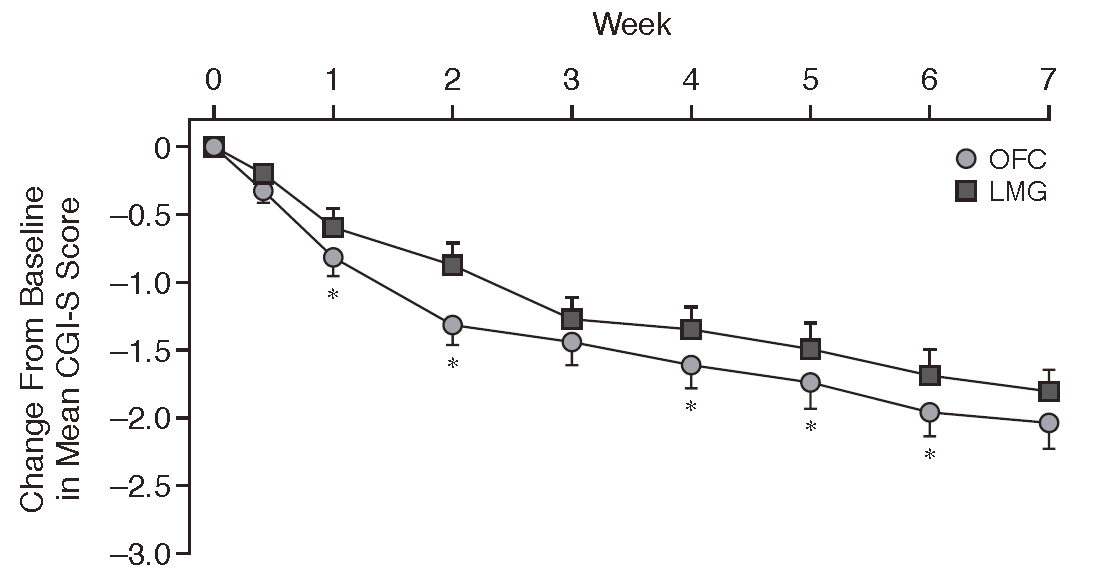
moodst1


Back to the rash story: unfortunately, a mild allergic reaction, appearing as a mild skin rash, is common. About one person in 10 gets it. This rash poses no major risk — unlike the severe Stevens Johnson Syndrome version. So, as you can imagine, the issue of “rash” comes up frequently this medication. Your doctor will have to determine, if you get a rash, whether you might be getting the bad one, Stevens Johnson Syndrome. The simplest way to manage this problem is simply to tell everyone to stop the medication
entirely if they get a rash. No further doses, that’s it, you’re done. That is what the manufacturer recommends.

Instead, as many other mood experts have described, I tell my patients: “if you get a rash of any kind, or a fever, call me and describe what is going on, and do not take any further doses until you hear back from me”. Your doctor may also feel comfortable trying to tell the difference between the bad rash and the benign rash, or she/he might refer you to a dermatologist. In any case, you have to be extremely careful about all this. Here is more detail about handling this rash issue.

In general, the target dose for most people is 200 mg. This probably provides more insurance against relapse than lower doses, even if depression is completely gone at a lower dose. I do have a few patients who are maintained at lower doses. If depression comes back at 200 mg, it is possible to move the dose up (I use 50 mg steps per week) to a maximum of 400 mg. At 300 mg and below, most patients have no side effects at all. But at the higher doses, many people get side effects. However, these side effects can be quite subtle and sometimes it takes a while to figure out that they are really happening, and that they are coming from the medication. These effects include: difficulty finding simple words you know very well (this has been called “word searching”), trouble remembering people’s names whom you know quite well; mild dizziness, or mild balance problems. I instruct my patients to turn their dose back down if they run into one of these problems.

Specifics: lithium

With any of these medications, the goal is 100% symptom control, with 0% side effects. Some people can reach that goal with lithium. There is a lot of variation in side effects with lithium: some people can handle blood levels above 1.2 mmol/L without any side effects at all (e.g. doses of 2100 mg), where others will have severe side effects with 300 mg alone.

Over the last 10 years I’ve waffled back and forth as to whether it’s better to start with immediate release lithium (IR) or the slow-release (SR), now that the SR is generic. But it doesn’t seem to make much difference where I start: some people have nausea, which is relieved by switching to the SR. Some people have diarrhea, which is often relieved by switching to the IR. Go figure. It’s about 50/50.

Understanding when to have a lithium level can be complicated. Generally, if the level on 600mg is less than 0.7 mmol/L, severe side effects are unlikely with a 300mg step up. Minor side effects such as dry mouth and urinating a lot, including having to get up at night to urinate, are common. These side effects generally increase with each dose increase, but most people can handle moderate levels of these effects.

There are three side effects that commonly limit lithium dosing before dangerous side effects show up:

  1. loose stool, progressing to diarrhea (worse with slow-release forms; try switching to regular)
  2. tremor
  3. mental dulling

None of these is likely to decrease with time: most people have to reduce the dose (try twice a day dosing first).

Lithium should not be used if you have kidney problems, unless very carefully regulated by someone who knows what to watch for. The levels may rise unpredictably to a dangerous range. Non-steroidal anti-inflammatories” (e.g. ibuprofen/Motrin, naproxen/Naprosyn, many others) and many blood pressure medications all can raise the risk of getting too high a blood level.

Specifics: valproate/divalproex

(If you are a woman between the ages of 12 and 50, unfortunately you should probably take this medication off your list of options, for two reasons. First, there may be a risk for women due to a possible shift in reproductive hormone regulation. For a discussion of the latest data on this risk, read about divalproex and PCOS. Secondly, this medication can cause abnormalities in developing children, so very effective precautions against becoming pregnant must be used for women who could become pregnant while taking it.)

Remember, the goal is 100% symptom control, with 0% side effects. In general, with slow-release valproate ( called divalproex), there are very few side effect problems. About 1 person in every 10 will have some nausea when starting, reduced if the medication is taken with meals. About 1 in 30 (in my experience) will have severe nausea. Even these folks can get used to the medication if the smallest size (125mg “sprinkles”) are used and increased by one pill per week or so. Other than nausea, however, other side effects are very uncommon — except weight gain, discussed in detail below.

Divalproex can be “loaded” with a large dose in the first day, to get it working faster (technically 20 mg per kilogram of body weight, but in practice it’s about 1500 mg in the first 24 hrs; some rare inpatient doc’s might give that as a single dose for a “loading strategy”. Going slower, to find the lowest dose that actually helps, may help prevent the most frequent problem with this medication: an appetite increase that leads to increased weight. Weight gain obviously carries health risks.

Many male patients can take 1500 or even 2000mg of valproate and not gain weight. Fewer women can, though, and many patients seem to hit a “weight gain threshold” somewhere around 1000mg. This threshold seems clearly to be higher when the new ER version is used; it looks like more patients can reach solid doses like 1500 mg with the new form. In my experience, more than 50% of women will gain weight at 1250mg or above (1500 or above with the ER version). Is this an appetite increase, as patients almost all experience when gaining weight? Or is there some metabolic shift, such as “metabolic syndrome“? The basis for this problem is still unknown. Some psychiatrists have tried using low doses of topiramate, another anti-seizure medication that tends to decrease appetite but has its own side effect problems, as an “antidote” to this appetite effect.

Fortunately, the appetite increase shows when this problem is going to occur. I have seen very few patients gain weight who did not experience the appetite increase. When people lower their dose, they can tell when their appetite returns to normal, and they do not seem to gain weight. So, I tell patients that if they get an abnormal appetite, they should lower their dose until their appetite returns to normal. The “threshold” seems to lie between 1000 mg and 1500 mg per day for most patients (if using the “ER” version). I don’t think I’ve seen a patient who experienced weight gain at 500 mg per day (there probably is one somewhere).

Divalproex at 500mg/day is not generally enough for symptom control, but when combined with low-dose lithium, it can be a very effective medication. And, not all patients will experience the weight gain problem. Hair loss is also common when people hit the weight gain range, but the dose decreases required for appetite control generally take people out of the “hair loss range” as well. For a bit more on this issue, read divalproex and hair loss.

Remember, after considering lithium and lamotrigine and divalproex, there are also other mood stabilizer options, fromaripiprazole to ziprasidone,so to speak.

Posted in News & updates | Leave a comment

Bipolar Medication Guide

If you have bipolar disorder, medication will most likely be a part of your treatment plan. Medication can help bring mania and depression under control and prevent relapse once your mood has stabilized. But taking medication is just one aspect of treatment. Your lifestyle, support system, and other types of therapy are also important in managing symptoms. Finding the right drug can be tricky, so it’s important to work closely with a specialist and re-evaluate your medication regularly as the optimum dose may change over time.

The role of medication in bipolar disorder treatment

If you have bipolar disorder, medication will likely be the foundation of your treatment plan. Medication can bring mania and depression under control and prevent relapse once your mood has stabilized. You may not like the idea of taking bipolar medication long term, especially if you’re struggling with unpleasant side effects. But just as a diabetic needs to take insulin in order to stay healthy, taking medication for bipolar disorder will help you maintain a stable mood.

However, do not expect medication alone to solve all your problems. There are plenty of other steps you can take to manage your symptoms and reduce the amount of medication required. Medication is most effective when used in combination with other bipolar disorder treatments, including therapy, self-help coping strategies, and healthy lifestyle choices.

Tips for getting the most out of medication for bipolar disorder

  • Avoid antidepressants. The treatment for bipolar depression is different than for regular depression. In fact, antidepressants can actually make bipolar disorder worse or trigger a manic episode. Try mood stabilizers first and never take antidepressants without them, as antidepressants can trigger mania and rapid mood cycling when used on their own.
  • Take advantage of natural mood stabilizers. Your lifestyle has an impact on your symptoms. If you make healthy daily choices, you may be able to reduce the amount of medication you need. Mood stabilizers that don’t require a prescription include keeping a strict sleep schedule, exercising regularly, practicing relaxation techniques, and developing a solid support system.
  • Add therapy to your treatment plan. Research shows that people who take medication for bipolar disorder tend to recover much faster and control their moods better if they also get therapy. Therapy gives you the tools to cope with life’s difficulties, monitor your progress, and deal with the problems bipolar disorder is causing in your personal and professional life.
  • Continue taking medication, even after you feel better. The likelihood of having a relapse is very high if you stop taking your bipolar medication. Suddenly stopping medication is especially dangerous. Talk to your doctor before you make any changes, even if you believe you no longer need medication. Your doctor can help you make any adjustments safely.

Finding the right bipolar disorder medication

It can take a while to find the right bipolar medication and dose. Everyone responds to medication differently, so you may have to try several bipolar disorder drugs before you find the one that works for you. Be patient, but don’t settle for a bipolar medication that makes you feel lousy, either.

Once you’ve discovered the right bipolar disorder drug or drug cocktail, it may still take time to determine the optimal dose. In the case of mood stabilizing medications such as lithium, the difference between a beneficial dose and a toxic one is small. Continue taking your medication even after you feel better as the likelihood of having a relapse is very high. Frequent office visits to re-evaluate your bipolar medication needs and careful monitoring of symptoms and side effects will help you stay safe.

Learn about your bipolar disorder medication

When starting a new medication for bipolar disorder, educate yourself about how to take it safely. Questions to ask your doctor about any new prescription include:

  • Are there any medical conditions that could be causing or exacerbating my mood swings?
  • What are the side effects and risks of the medication you are recommending?
  • When and how should I take this medication?
  • Are there any foods or other substances I will need to avoid?
  • How will this drug interact with my other prescriptions?
  • How long will I have to take this medication?
  • Will withdrawing from the drug be difficult if I decide to stop?
  • Will my symptoms return when I stop taking the medication?

How often should I talk with my doctor?

During acute mania or depression, most people talk with their doctor at least once a week, or even every day, to monitor symptoms, medication doses, and side effects. As you recover, you will see your doctor less often; once you are well, you might see your doctor for a quick review every few months. Regardless of scheduled appointments or blood tests, call your doctor if you have:

  • Suicidal or violent feelings
  • Changes in mood, sleep, or energy
  • Changes in medication side effects
  • Need for over-the-counter medication (cold or pain medicine)
  • An acute medical illness or need for surgery, extensive dental care, or changes in other medicines you take
  • A change in your medication situation, such as pregnancy

Source: Treatment of Bipolar Disorder: A Guide for Patients and Families

Generic vs. brand-name drugs

Generic drugs have the same use, dosage, side effects, risks, safety profile, and potency as the original brand-name drug. The main reason why generic drugs are cheaper than brand-name drugs is that the generic drug manufacturer does not need to recoup huge expenses for developing and marketing a drug. Once the patent for the original drug has expired, other manufacturers can produce the same drug with the same ingredients at a markedly lower cost.

Occasionally, brand-name drugs have different coatings or color dyes to change their appearance. In rare cases, these extra ingredients will make the generic form of the drug less tolerable, so if your condition worsens after switching from a brand-name to a generic drug, consult your doctor. In most cases, however, generic drugs are just as safe and effective as brand-name drugs, and a lot easier on your wallet.

Taking medication for bipolar disorder responsibly

All prescription drugs come with risks, but if you take your bipolar disorder medications responsibly and combine them with therapy and healthy lifestyle choices, you can minimize the risks and maximize your chances of treatment success.

Take your bipolar medication as prescribed

You may be tempted to stop taking your bipolar disorder medication if you’re experiencing side effects. Or conversely, you may want to stop taking your pills because you feel great and don’t think you need them anymore. However, stopping maintenance medication comes with a high risk of relapse. Stopping cold turkey is even more risky.

Before you make any bipolar medication changes, talk to you doctor. If you don’t like the way the drug makes you feel or if it’s not working, there may be other options you can try. And if you decide that medication is not for you, your doctor can help you taper off the drugs safely.

Keep track of side effects

Track any side effects you experience. Using a log, keep a record of your symptoms, when they occur, and how bad they are. Bring the worksheet to your doctor. He or she may have suggestions for minimizing the side effects. If side effects are severe, your doctor may switch you to another drug or change your bipolar medication dose.

Be aware of potential drug interactions

You should always check for drug interactions before taking another prescription medication, over-the-counter drug, or herbal supplement. Drug interactions can cause unexpected side effects or make your bipolar disorder medication less effective or even dangerous. Mixing certain foods and beverages with your bipolar medication can also cause problems.

Talk to your doctor about special precautions for the bipolar medication or medications you’re taking. You can also learn about potential interactions by reading drug labels or talking to your pharmacist.

Tips for managing bipolar disorder medications

  • Use a daily reminder/medication saver system to make sure you are taking all of the necessary medications.
  • Throw away old medications or those you are no longer taking.
  • Realize that medications work best when you are making other healthy choices. Don’t expect a pill to fix a bad diet, lack of exercise, or an abusive or chaotic lifestyle.
  • Reduce or discontinue the use of alcohol. Alcohol is a depressant and makes recovery even more difficult. It can also interfere with the way your medication works.

Source: Depression and Bipolar Support Alliance

Lithium: The first mood stabilizer for bipolar disorder

Mood stabilizers are medications that help control the highs and lows of bipolar disorder. They are the cornerstone of treatment, both for mania and depression. Lithium is the oldest and most well-known mood stabilizer. It is highly effective for treating mania.

Lithium can also help bipolar depression. However, it is not as effective for mixed episodes or rapid cycling forms of bipolar disorder. Lithium takes from one to two weeks to reach its full effect.

Common side effects of lithium

The following side effects are common on lithium. Some may go away as your body adapts to the medication.

  • Weight gain
  • Drowsiness
  • Tremor
  • Weakness or fatigue
  • Excessive thirst; increased urination
  • Stomach pain
  • Thyroid problems
  • Memory and concentration problems
  • Nausea, vertigo
  • Diarrhea

The importance of regular blood tests

If you take lithium, it’s important to have regular blood tests to make sure your dose is in the effective range. Doses that are too high can be toxic. When you first start taking it, your doctor may check your blood levels once or twice a week. Once the right dose has been determined and your levels are steady, blood tests will be less frequent.

However, it’s still important to get blood tests every two to three months, since many things can cause your lithium levels to change. Even taking a different brand of lithium can lead to different blood levels.

Other factors that influence your lithium levels

  • Weight loss or gain
  • The amount of sodium in your diet
  • Seasonal changes (lithium levels may be higher in the summer)
  • Many prescription and over-the-counter drugs (e.g. ibuprofen, diuretics, and heart and blood pressure medication)
  • Caffeine, tea, and coffee
  • Dehydration
  • Hormonal fluctuations during the menstrual cycle and pregnancy
  • Changes in your health (for example, heart disease and kidney disease increase the risk of lithium toxicity)

What can I do to avoid toxic lithium levels from developing?

  • Make sure that you go for the blood tests whenever they are needed.
  • Don’t suddenly change the amount of salt in your diet; it is especially important not to suddenly reduce your salt intake.
  • Make sure that you drink enough fluids, especially if you are exercising heavily or in hot weather when you will sweat more.
  • Remember that alcoholic drinks can make you lose water overall. This is particularly important to bear in mind if you are on vacation in the sun: you may feel like drinking more alcohol, and the weather may be hot so you sweat more.
  • See a doctor straight away if you get any of the physical illnesses or symptoms listed above. Always tell any doctor or pharmacist that you are taking lithium before you are prescribed, or buy, any new medicines.

Source: Netdoctor.co.uk

Anticonvulsant mood stabilizers for bipolar disorder

Anticonvulsants are used in the treatment of bipolar disorder as mood stabilizers. Originally developed for the treatment of epilepsy, they have been shown to relieve the symptoms of mania and reduce mood swings.

Valproic acid (Depakote)

Valproic acid, also known as divalproex or valproate, is a highly effective mood stabilizer. Common brand names include Depakote and Depakene. Valproic acid is often the first choice for rapid cycling, mixed mania, or mania with hallucinations or delusions. It is a good bipolar medication option if you can’t tolerate the side effects of lithium.

Common side effects include:

  • Drowsiness
  • Weight gain
  • Dizziness
  • Tremor
  • Diarrhea
  • Nausea

Other anticonvulsant medications for bipolar disorder

  • Carbamazepine (Tegretol)
  • Lamotrigine (Lamictal)
  • Topiramate (Topamax)

Antidepressant medications for bipolar disorder

Although antidepressants have traditionally been used to treat episodes of bipolar depression, their use is becoming more and more controversial. A growing body of research calls their safety and efficacy into question.

Antidepressants should be used with caution

  • Antidepressants don’t work very well for bipolar depression. Mounting evidence suggests that antidepressants aren’t effective in the treatment of bipolar depression. A major study funded by the National Institute of Mental Health showed that adding an antidepressant to a mood stabilizer was no more effective in treating bipolar depression than using a mood stabilizer alone. Another NIHM study found that antidepressants work no better than placebo.
  • Antidepressants can trigger mania in people with bipolar disorder. If antidepressants are used at all, they should be combined with a mood stabilizer such as lithium or valproic acid. Taking an antidepressant without a mood stabilizer is likely to trigger a manic episode.
  • Antidepressants can increase mood cycling. Many experts believe that over time, antidepressant use in people with bipolar disorder has a mood destabilizing effect, increasing the frequency of manic and depressive episodes.

Treating bipolar depression with mood stabilizers

The new focus in bipolar depression treatment is on optimizing the dose of mood stabilizers. If you can stop your mood cycling, you might stop having depressive episodes entirely. If you are able to stop the mood cycling, but symptoms of depression remain, the following medications may help:

  • Lamictal (lamotrigine)
  • Seroquel (quetiapine)
  • Zyprexa (olanzapine)
  • Symbyax (a pill that combines olanzapine with the antidepressant fluoxetine)

What should I do if I’m currently taking an antidepressant?

First, and most importantly, don’t panic! DO NOT stop taking your antidepressant suddenly, as this can be dangerous. Talk to your doctor about slowly tapering off the antidepressant. The tapering process should be done very slowly, usually over the course of several months, in order to reduce adverse withdrawal effects. Only stop taking antidepressants immediately if any symptoms of mania or hypomania develop.

Antipsychotic medications for bipolar disorder

If you lose touch with reality during a manic or depressive episode, an antipsychotic drug may be prescribed. They have also been found to help with regular manic episodes. Antipsychotic medications may be helpful if you have tried mood stabilizers without success. Often, antipsychotic medications are combined with a mood stabilizer such as lithium or valproic acid.

Antipsychotic medications used for bipolar disorder include:

  • Olanzapine (Zyprexa)
  • Quetiapine (Seroquel)
  • Risperidone (Risperdal)
  • Ariprazole (Abilify)
  • Ziprasidone (Geodon)
  • Clozapine (Clozaril)

Common side effects of antipsychotic medications for bipolar disorder

  • Drowsiness
  • Weight gain
  • Sexual dysfunction
  • Dry mouth
  • Constipation
  • Blurred vision

Dealing with antipsychotic-induced erectile dysfunction

Sexual and erectile dysfunction is a common side effect of antipsychotic medications, one that often deters bipolar disorder patients from continuing medication. However, a recent study has shown that the medication Sildenafil citrate (Viagra) is both safe and effective in the treatment of antipsychotic-induced erectile dysfunction in men.

Source: The American Journal of Psychiatry

Other medications for bipolar disorder

Benzodiazepines

Mood stabilizers can take up to several weeks to reach their full effect. While you’re waiting for the medication to kick in, your doctor may prescribe a benzodiazepine to relieve any symptoms of anxiety, agitation, or insomnia. Benzodiazepines are fast-acting sedatives that work within 30 minutes to an hour. Because of their high addictive potential, however, benzodiazepines should only be used until your mood stabilizer or antidepressant begins to work. Those with a history of substance abuse should be particularly cautious.

Calcium channel blockers

Traditionally used to treat heart problems and high blood pressure, they also have a mood stabilizing effect. They have fewer side effects than traditional mood stabilizers, but they are also less effective. However, they may be an option for people who can’t tolerate lithium or anticonvulsants.

Thyroid medication

People with bipolar disorder often have abnormal levels of thyroid hormone. Thyroid dysfunction is particularly prevalent in rapid cyclers. Lithium treatment can also cause low thyroid levels. In these cases, thyroid medication is added to the drug treatment regimen. While research is still ongoing, thyroid medication also shows promise as a treatment for bipolar depression with minimal side effects.

Bipolar disorder medication alone is not enough

Bipolar medication is most effective when used in combination with other bipolar disorder treatments, including therapy, self-help coping strategies, natural mood stabilizers, and healthy lifestyle choices.

  • Therapy. People who take medication for bipolar disorder tend to recover much faster and control their moods much better if they also get therapy. Therapy gives you the tools to cope with life’s difficulties, monitor your progress, and deal with the problems bipolar disorder is causing in your personal and professional life.
  • Exercise. Getting regular exercise can reduce bipolar disorder symptoms and help stabilize mood swings. Exercise is also a safe and effective way to release the pent-up energy associated with the manic episodes of bipolar disorder.
  • Stable sleep schedule. Studies have found that insufficient sleep can precipitate manic episodes in bipolar patients. To keep symptoms and mood episodes to a minimum maintain a stable sleep schedule. It is also important to regulate darkness and light exposure as these throw off sleep-wake cycles and upset the sensitive biological clock in people with bipolar disorder.
  • Healthy diet. Omega-3 fatty acids may lessen the symptoms of bipolar disorder. Weight gain is a common side effect of many bipolar medications, so it’s important to adopt healthy eating habits to manage your weight. Avoid caffeine, alcohol, and drugs as they can adversely interact with bipolar medications.
  • Social support network. Living with bipolar disorder can be challenging, and having a solid support system in place can make all the difference in your outlook and motivation. Participating in a bipolar disorder support group can give you the opportunity to share your experiences and learn from others. Support from loved ones also makes a huge difference, so reach out to your family and friends. They care about you and want to help.
If stress or strained relationships are a factor in your ability to cope with bipolar disorder, FEELINGLOVED can help.

More »

Take our quick survey »

This short survey is a simple, effective way to help us serve you better.

Related HelpGuide articles

Next step…

Natural mood stabilizers for bipolar disorder. There are many things you can do to stabilize your mood. The way you live your life is just as important, if not more so, than the medication you take. Making healthy choices for yourself can make a huge difference in how you feel. Read Bipolar Support and Self-Help.

Posted in News & updates | Leave a comment

Substance Abuse and Mental Health

When you have both a substance abuse problem and a mental health issue such as depression, bipolar disorder, or anxiety, it is called a co-occurring disorder or dual diagnosis. Dealing with substance abuse, alcoholism, or drug addiction is never easy, and it’s even more difficult when you’re also struggling with mental health problems, but there are treatments that can help. With proper treatment, support, and self-help strategies, you can overcome a dual diagnosis and reclaim your life.

Understanding the link between substance abuse and mental health

In a dual diagnosis, both the mental health issue and the drug or alcohol addiction have their own unique symptoms that may get in the way of your ability to function, handle life’s difficulties, and relate to others. To make the situation more complicated, the co-occurring disorders also affect each other and interact. When a mental health problem goes untreated, the substance abuse problem usually gets worse as well. And when alcohol or drug abuse increases, mental health problems usually increase too.

What comes first: Substance abuse or the mental health problem?

Addiction is common in people with mental health problems. But although substance abuse and mental health disorders like depression and anxiety are closely linked, one does not directly cause the other.

  • Alcohol or drugs are often used to self-medicate the symptoms of depression or anxiety.Unfortunately, substance abuse causes side effects and in the long run worsens the very symptoms they initially numbed or relieved.
  • Alcohol and drug abuse can increase underlying risk for mental disorders. Mental disorders are caused by a complex interplay of genetics, the environment, and other outside factors. If you are at risk for a mental disorder, drug or alcohol abuse may push you over the edge.
  • Alcohol and drug abuse can make symptoms of a mental health problem worse. Substance abuse may sharply increase symptoms of mental illness or trigger new symptoms. Alcohol and drug abuse also interact with medications such as antidepressants, anti-anxiety pills, and mood stabilizers, making them less effective.

Addiction is common in people with mental health problems

According to reports published in the Journal of the American Medical Association:

  • Roughly 50 percent of individuals with severe mental disorders are affected by substance abuse.
  • 37 percent of alcohol abusers and 53 percent of drug abusers also have at least one serious mental illness.
  • Of all people diagnosed as mentally ill, 29 percent abuse either alcohol or drugs.

Source: National Alliance on Mental Illness

Recognizing co-occurring disorders or dual diagnosis

It can be difficult to diagnose a substance abuse problem and a co-occurring mental health disorder such as depression, anxiety, or bipolar disorder. It takes time to tease out what might be a mental disorder and what might be a drug or alcohol problem.

Complicating the issue is denial. Denial is common in substance abuse. It’s hard to admit how dependent you are on alcohol or drugs or how much they affect your life. Denial frequently occurs in mental disorders as well. The symptoms of depression or anxiety can be frightening, so you may ignore them and hope they go away. Or you may be ashamed or afraid of being viewed as weak if you admit the problem.

Admitting you have a dual diagnosis or co-occurring disorders

Just remember: substance abuse problems and mental health issues don’t get better when they’re ignored. In fact, they are likely to get much worse. You don’t have to feel this way. Admitting you have a problem is the first step towards conquering your demons and enjoying life again.

  • Consider family history. If people in your family have grappled with either a mental disorder such as depression or alcohol abuse or drug addiction, you have a higher risk of developing these problems yourself.
  • Consider your sensitivity to alcohol or drugs. Are you highly sensitive to the effects of alcohol or drugs? Have you noticed a relationship between your substance use and your mental health? For example, do you get depressed when you drink?
  • Look at symptoms when you’re sober. While some depression or anxiety is normal after you’ve stopped drinking or doing drugs, if the symptoms persist after you’ve achieved sobriety, you may be dealing with a mental health problem.
  • Review your treatment history. Have you been treated before for either your addiction or your mental health problem? Did the substance abuse treatment fail because of complications from your mental health issue or vice versa?

Signs and symptoms of substance abuse

If you’re wondering whether you have a substance abuse problem, the following questions may help. The more “yes” answers, the more likely your drinking or drug use is a problem.

  • Have you ever felt you should cut down on your drinking or drug use?
  • Have you tried to cut back, but couldn’t?
  • Do you ever lie about how much or how often you drink or use drugs?
  • Have your friends or family members expressed concern about your alcohol or drug use?
  • Do you ever felt bad, guilty, or ashamed about your drinking or drug use?
  • On more than one occasion, have you done or said something while drunk or high that you later regretted?
  • Have you ever blacked out from drinking or drug use?
  • Has your alcohol or drug use caused problems in your relationships?
  • Has you alcohol or drug use gotten you into trouble at work or with the law?

Signs and symptoms of common co-occurring disorders

The mental health problems that most commonly co-occur with substance abuse are depression,anxiety disorders, and bipolar disorder.

Common signs and symptoms of depression

  • Feelings of helplessness and hopelessness
  • Loss of interest in daily activities
  • Inability to experience pleasure
  • Appetite or weight changes
  • Sleep changes
  • Loss of energy
  • Strong feelings of worthlessness or guilt
  • Concentration problems
  • Anger, physical pain, and reckless behavior (especially in men)

Common signs and symptoms of mania in bipolar disorder

  • Feelings of euphoria or extreme irritability
  • Unrealistic, grandiose beliefs
  • Decreased need for sleep
  • Increased energy
  • Rapid speech and racing thoughts
  • Impaired judgment and impulsivity
  • Hyperactivity
  • Anger or rage

Common signs and symptoms of anxiety

  • Excessive tension and worry
  • Feeling restless or jumpy
  • Irritability or feeling “on edge”
  • Racing heart or shortness of breath
  • Nausea, trembling, or dizziness
  • Muscle tension, headaches
  • Trouble concentrating
  • Insomnia

Treatment for substance abuse and mental health problems

The best treatment for co-occurring disorders is an integrated approach, where both the substance abuse problem and the mental disorder are treated simultaneously.

Recovery depends on treating both the addiction and the mental health problem

Whether your mental health or substance abuse problem came first, recovery depends on treating bothdisorders.

  • There is hope. Recovering from co-occurring disorders takes time, commitment, and courage. It may take months or even years but people with substance abuse and mental health problems can and doget better.
  • Combined treatment is best. Your best chance of recovery is through integrated treatment for both the substance abuse problem and the mental health problem. This means getting combined mental health and addiction treatment from the same treatment provider or team.
  • Relapses are part of the recovery process. Don’t get too discouraged if you relapse. Slips and setbacks happen, but, with hard work, most people can recover from their relapses and move on with recovery.
  • Peer support can help. You may benefit from joining a self-help support group like Alcoholics Anonymous or Narcotics Anonymous. They give you a chance to lean on others who know what you’re going through and learn from their experiences.

How to find the right program for co-occurring disorders

As with a substance abuse program, make sure that the program is appropriately licensed and accredited, the treatment methods are backed by research, and there is an aftercare program to prevent relapse. Additionally, you should make sure that the program has experience with your particular mental health issue. Some programs, for example, may have experience treating depression or anxiety, but not schizophrenia or bipolar disorder.

There are a variety of approaches that treatment programs may take, but there are some basics of effective treatment that you should look for:

  • Treatment addresses both the substance abuse problem and your mental health problem.
  • You share in the decision-making process and are actively involved in setting goals and developing strategies for change.
  • Treatment includes basic education about your disorder and related problems.
  • You are taught healthy coping skills and strategies to minimize substance abuse, cope with upset, and strengthen your relationships.

Treatment for dual diagnosis or co-occurring disorders

  • Helping you think about the role that alcohol and other drugs play in your life. This should be done confidentially, without any negative consequences. People feel free to discuss these issues when the discussion is confidential, nonjudgmental, and not tied to legal consequences.
  • Offering you a chance to learn more about alcohol and drugs, to learn about how they interact with mental illnesses and with medications, and to discuss your own use of alcohol and drugs.
  • Helping you become involved with supported employment and other services that may help your process of recovery.
  • Helping you identify and develop your own recovery goals. If you decide that your use of alcohol or drugs may be a problem, a counselor trained in integrated dual diagnosis treatment can help you identify and develop your own recovery goals. This process includes learning about steps toward recovery from both illnesses.
  • Providing special counseling specifically designed for people with dual diagnosis. This can be done individually, with a group of peers, with your family, or with a combination of these.

Source: SAMHSA

Treatment programs for veterans with co-occurring disorders

Veterans deal with additional challenges when it comes to co-occurring disorders. The pressures of deployment or combat can exacerbate underlying mental disorders, and substance abuse is a common way of coping with unpleasant feelings or memories. Often, these problems take a while to show up after a vet returns home, and may be initially mistaken for readjustment. Untreated co-occurring disorders can lead to major problems at home and work and in your daily life, so it’s important to seek help.

Veterans often benefit from treatment and support from specialized programs that address the unique stresses veterans face.

Group support for substance abuse and co-occurring disorders

As with other addictions, groups are very helpful, not only in maintaining sobriety, but also as a safe place to get support and discuss challenges. Sometimes treatment programs for co-occurring disorders provide groups that continue to meet on an aftercare basis. Your doctor or treatment provider may also be able to refer you to a group for people with co-occurring disorders.

While it’s often best to join a group that addresses both substance abuse and your mental health disorder, twelve-step groups for substance abuse can also be helpful—plus they’re more common, so you’re likely to find one in your area. These free programs, facilitated by peers, use group support and a set of guided principles—the twelve steps to obtain and maintain sobriety.

Just make sure your group is accepting of the idea of co-occurring disorders and psychiatric medication. Some people in these groups, although well meaning, may mistake taking psychiatric medication as another form of addiction. You want a place to feel safe, not pressured.

Self-help for substance abuse and co-occurring disorders

Getting sober is only the beginning. Your continued recovery depends on continuing mental health treatment, learning healthier coping strategies, and making better decisions when dealing with life’s challenges.

Recovery tip 1: Recognize and manage overwhelming stress and emotions

  • Learn how to manage stress. Stress is inevitable, so it’s important to have healthy coping skills so you can deal with stress without turning to alcohol or drugs. Stress management skills go a long way towards preventing relapse and keeping your symptoms at bay.
  • Know your triggers and have an action plan. If you’re coping with a mental disorder as well, it’s especially important to know signs that your illness is flaring up. Common causes include stressful events, big life changes, or unhealthy sleeping or eating. At these times, having a plan in place is essential to preventing drug relapse. Who will you talk to? What do you need to do?

Recovery tip 2: Stay connected

  • Get therapy or stay involved in a support group. Your chances of staying sober improve if you are participating in a social support group like Alcoholics Anonymous or Narcotics Anonymous or if you are getting therapy.
  • Follow doctor’s orders. Once you are sober and you feel better, you might think you no longer need medication or treatment. But arbitrarily stopping medication or treatment is a common reason for relapse in people with co-occurring disorders. Always talk with your doctor before making any changes to your medication or treatment routine.

Recovery tip 3: Make healthy lifestyle changes

  • Practice relaxation techniques. When practiced regularly, relaxation techniques such as mindfulness meditation, progressive muscle relaxation, and deep breathing can reduce symptoms of stress, anxiety, and depression, and increase feelings of relaxation and emotional well-being.
  • Adopt healthy eating habits. Start the day right with breakfast, and continue with frequent small meals throughout the day. Going too long without eating leads to low blood sugar, which can make you feel more stressed or anxious.
  • Exercise regularly. Exercise is a natural way to bust stress, relieve anxiety, and improve your mood and outlook. To achieve the maximum benefit, aim for at least 30 minutes of aerobic exercise on most days.
  • Get enough sleep. A lack of sleep can exacerbate stress, anxiety, and depression, so try to get 7 to 9 hours of quality sleep a night.

Helping a loved one with a substance abuse and mental health problem

Helping a loved one with both a substance abuse and a mental health problem can be a roller coaster. Resistance to treatment is common and the road to recovery can be long.

The best way to help someone is to accept what you can and cannot do. You cannot force someone to remain sober, nor can you make someone take their medication or keep appointments. What you can do is make positive choices for yourself, encourage your loved one to get help, and offer your support while making sure you don’t lose yourself in the process.

  • Seek support. Dealing with a loved one’s dual diagnosis of mental illness and substance abuse can be painful and isolating. Make sure you’re getting the emotional support you need to cope. Talk to someone you trust about what you’re going through. It can also help to get your own therapy or join a support group.
  • Set boundaries. Be realistic about the amount of care you’re able to provide without feeling overwhelmed and resentful. Set limits on disruptive behaviors, and stick to them. Letting the co-occurring disorders take over your life isn’t healthy for you or your loved one.
  • Educate yourself. Learn all you can about your loved one’s mental health problem, as well as substance abuse treatment and recovery. The more you understand what your loved one is going through, the better able you’ll be to support recovery.
  • Be patient. Recovering from a dual diagnosis doesn’t happen overnight. Recovery is an ongoing process that can take months or years, and relapse is common. Ongoing support for both you and your loved one is crucial as you work toward recovery.

If you want to learn how to recognize the emotional issues that contribute to substance abuse and how to overcome them,FEELING LOVED can help.

More »

Take our quick survey »

This short survey is a simple, effective way to help us serve you better.

Related HelpGuide articles

Resources and references

General information about co-occurring disorders/dual diagnosis

Dual Diagnosis or Co-Occurring Disorders – Overview of dual diagnosis, or co-occurring substance abuse and mental health disorders. Includes common signs and symptoms. (Dual Recovery Anonymous)

Dual Diagnosis and Recovery – Learn about co-occurring substance abuse and mental illness, also called dual diagnosis. Includes common symptoms and treatment tips. (Depression and Bipolar Support Alliance)

Co-occurring Disorders – Browse through an FAQ with helpful advice for both individuals with co-occurring disorders and their family members and loved ones. (Mental Health America)

Treatment for co-occurring substance abuse and mental health disorders

In the U.S.:

SAMHSA Substance Abuse Treatment Facility Locator – Provides a searchable database of private and public substance abuse treatment facilities. SAMHSA also operates a helpline: (800) 662-HELP (4357) with help in English and Spanish, or TDD at (800) 487-4889. (Substance Abuse and Mental Health Services Administration)

International:

Dual Recovery Anonymous – Independent, twelve-step, self-help organization for people who are chemically dependent and also affected by a mental health disorder. (Dual Recovery Anonymous)

Locating a 12-step program in your area

Twelve-step programs, such as Alcoholics Anonymous or Narcotics Anonymous, can be a good source of support as you go through recovery and are available in many countries around the world.

Posted in News & updates | Leave a comment

Helping a Loved One with Bipolar Disorder

If someone close to you has bipolar disorder, your love and support can make a difference in treatment and recovery. You can help by learning about the illness, offering hope and encouragement, keeping track of symptoms, and being a partner in treatment. But caring for a person with bipolar disorder will take a toll if you neglect your own needs, so it’s important to find a balance between supporting your loved one and taking care of yourself.

Helping a family member or friend with bipolar disorder

Dealing with the ups and downs of bipolar disorder can be difficult—and not just for the person with the illness. The moods and behaviors of a person with bipolar disorder affect everyone around—especially family members and close friends. During a manic episode, you may have to cope with reckless antics, outrageous demands, explosive outbursts, and irresponsible decisions. And once the whirlwind of mania has passed, it often falls on you to deal with the consequences. During episodes of depression, you may have to pick up the slack for a loved one who doesn’t have the energy to meet responsibilities at home or work.

The good news is that most people with bipolar disorder can stabilize their moods with proper treatment, medication, and support—and you can play a significant role in his or her recovery. Often, just having someone to talk to can make all the difference to your loved one’s outlook and motivation.

Here are some other ways you can help:

  • Learn about bipolar disorder. Learn everything you can about the symptoms and treatment options. The more you know about bipolar disorder, the better equipped you’ll be to help your loved one and keep things in perspective.
  • Encourage the person to get help. The sooner bipolar disorder is treated, the better the prognosis, so urge your loved one to seek professional help right away. Don’t wait to see if the person will get better without treatment.
  • Be understanding. Let your friend or family member know that you’re there if he or she needs a sympathetic ear, encouragement, or assistance with treatment. People with bipolar disorder are often reluctant to seek help because they don’t want to feel like a burden to others, so remind the person that you care and that you’ll do whatever you can to help.
  • Be patient. Getting better takes time, even when a person is committed to treatment. Don’t expect a quick recovery or a permanent cure. Be patient with the pace of recovery and prepare for setbacks and challenges. Managing bipolar disorder is a lifelong process.

The importance of support in bipolar disorder recovery

People with bipolar disorder do better when they have support from family members and friends. Those whose loved ones are involved and supportive tend to recover more quickly, experience fewer manic and depressive episodes, and have milder symptoms.

Bipolar disorder and the family

Living with a person who has bipolar disorder can cause stress and tension in the family. On top of the challenge of dealing with symptoms and their consequences, family members often struggle with feelings of guilt, fear, anger, and helplessness. Ultimately, the strain can cause serious relationship problems. But families can successfully deal with bipolar disorder if they learn to accept the illness and its difficulties.

When you’re feeling frustrated or guilty, it’s important to remember that bipolar disorder isn’t anyone’s fault.

Accepting bipolar disorder involves acknowledging that things may never again be “normal.” Treatment can make a huge difference for your loved one, but it may not take care of all symptoms or impairments. To avoid disappointment and resentments, it’s important to have realistic expectations. Expecting too much of your family member is a recipe for failure. On the other hand, expecting too little can also hinder recovery, so try to find a balance between encouraging independence and providing support.

Tips for coping with bipolar disorder in the family

  • Accept your loved one’s limits – People with bipolar disorder can’t control their moods. They can’t just snap out of a depression or get a hold of themselves during a manic episode. Neither depression nor mania can be overcome through self-control, willpower, or reasoning. Telling a person to “Stop acting crazy” or “Look on the bright side” won’t help.
  • Accept your own limits – You can’t rescue a person with bipolar disorder, nor can you force someone to take responsibility for getting better. You can offer support, but ultimately, recovery is in the hands of the person with the illness.
  • Reduce stress – Stress makes bipolar disorder worse, so try to find ways to reduce stress in your loved one’s life. Ask how you can help and volunteer to take over some of the person’s responsibilities if needed. Establishing and enforcing a daily routine—with regular times for getting up, having meals, and going to bed—can also reduce family stress.
  • Communicate openlyOpen and honest communication is essential to coping with bipolar disorder in the family. Share your concerns in a loving way, ask the person how he or she is feeling, and make an effort to truly listen—even if you disagree with your loved one or don’t relate to what’s being said.

Supporting a person with bipolar disorder

What you can say that helps:

  • You are not alone in this. I’m here for you.
  • I understand you have a real illness and that’s what causes these thoughts and feelings.
  • You may not believe it now, but the way you’re feeling will change.
  • I may not be able to understand exactly how you feel, but I care about you and want to help.
  • You are important to me. Your life is important to me.

Adapted from: The Depression and Bipolar Support Alliance

Convincing a person with bipolar disorder to see a doctor

Aside from offering emotional support, the best way to help someone with bipolar disorder is by encouraging and supporting treatment. However, people with bipolar disorder tend to lack insight into their condition, so it’s not always easy to get them to a doctor. When they’re manic, they feel great and don’t realize there’s a problem. When they’re depressed, they may recognize something’s wrong, but lack the energy to seek help.

If your loved one won’t acknowledge the possibility of bipolar disorder, don’t argue about it. The idea may be frightening to the person, so be sensitive. Suggest a routine medical checkup instead, or a doctor’s visit for a specific symptom, such as insomnia, irritability, or fatigue (you can call ahead to tell the doctor of your bipolar disorder concerns).

Things you can say that might help:

  • Bipolar disorder is a real illness, like diabetes. It requires medical treatment.
  • You’re not to blame for bipolar disorder. You didn’t cause it. It’s not your fault.
  • You can feel better. There are many treatments that can help.
  • When bipolar disorder isn’t treated, it usually gets worse.

Supporting a loved one during bipolar disorder treatment

Once your friend or family member agrees to see a doctor, you can help by being a partner in treatment. Your support can make a big difference in treatment success, so offer to be involved in any way the person with bipolar disorder wants or needs.

Things you can do to support a loved one’s bipolar disorder treatment:

  • Find qualified doctors and therapists
  • Set up appointments and go along
  • Offer your insight to the doctor
  • Monitor your loved one’s moods
  • Learn about the person’s medications
  • Track treatment progress
  • Watch for signs of relapse
  • Alert the doctor to problems


Encourage the person to take bipolar disorder medication

Encourage the person to take bipolar disorder medicationMedication is the cornerstone of treatment for bipolar disorder, and most people need it to regulate their moods and avoid relapse. Despite the need for medication, many people with bipolar disorder stop taking it. Some quit because they’re feeling better, others because of side effects, and still others because they enjoy the symptoms of mania. People who don’t think they have a problem are particularly likely to stop taking medication.

You can help a person with bipolar disorder stay on track by emphasizing the importance of medication and making sure all prescriptions are being taken as directed. Also encourage the person to speak to the doctor about any bothersome side effects. Side effects can be very unpleasant if the dose of the medication is too low or too high, but a change in medication or dosage may solve the problem. Remind the person that abruptly stopping medication is dangerous.

Watch for warning signs of bipolar disorder relapse

Even if a person with bipolar disorder is committed to treatment, there may be times when symptoms get worse. Take action right away if you notice any troubling symptoms or mood changes. Point out the emerging bipolar symptoms to your loved one and alert the doctor. With swift intervention, you may be able to prevent an episode of mania or depression from developing fully.

Mania warning signs and symptoms:

  • Sleeping less
  • Elevated mood
  • Restlessness
  • Speaking rapidly
  • Increase in activity level
  • Irritability or aggression

Depression warning signs and symptoms:

  • Fatigue and lethargy
  • Sleeping more
  • Trouble concentrating
  • Loss of interest in activities
  • Withdrawing from others
  • Change in appetite

Coping with mania and depression: Tips for family and friends

If relapse can’t be prevented, there are things you can do to cope during a manic or depressive episode.

  • Don’t take bipolar symptoms personally. When in the midst of a bipolar episode, people often say or do things that are hurtful or embarrassing. When manic, they may be reckless, cruel, critical, and aggressive. When depressed, they may be rejecting, irritable, hostile, and moody. It’s hard not to take such behaviors personally, but try to remember that they’re symptoms of a mental illness, not the result of selfishness or immaturity.
  • Be prepared for destructive behaviors. When manic or depressed, people with bipolar disorder may behave in destructive or irresponsible ways. Planning ahead for how to handle such behavior can help. When your loved one is well, negotiate a treatment contract that gives you advance approval for protecting him or her when symptoms flare up. Agree on specific steps you’ll take, such as removing credit cards or car keys, going together to the doctor, or taking charge of household finances.
  • Know what to do in a crisis. It’s important to plan ahead for times of crisis so you can act quickly and effectively when it occurs. Having a crisis plan can help. Make sure to include a list of emergency contact information for doctors, therapists, and other loved ones who will help. Also include the address and phone number of the hospital you will take the person to if necessary.
  • Call 911 (or your country’s emergency services number) in an emergency. If a person with bipolar disorder is suicidal or violent, don’t try to handle the situation alone. If you’re worried that your loved one may hurt you, get to safety and then call the police. If the person is suicidal, don’t leave him or her alone. Call for an ambulance and stay with the person until it arrives.

Supporting someone who is manic

  • Spend time with the person. People who are manic often feel isolated from other people. Spending even short periods of time with them helps. If the person has a lot of energy, walk together, which allows the person to keep on the move but share your company.
  • Answer questions honestly. However, do not argue or debate with a person during a manic episode. Avoid intense conversation.
  • Don’t take any comments personally. During periods of high energy, a person often says and does things that he or she would not usually say or do, including focusing on negative aspects of others. If needed, stay away from the person and avoid arguments.
  • Prepare easy-to-eat foods and drinks (such as peanut butter and jelly sandwiches, apples, cheese crackers, and juices), because it is difficult for the person to sit down to a meal during periods of high energy.
  • Avoid subjecting the person to a lot of activity and stimulation. It is best to keep surroundings as quiet as possible.
  • Allow the person to sleep whenever possible. During periods of high energy, sleeping is difficult and short naps may be taken throughout the day. Sometimes the person feels rested after only 2 to 3 hours of sleep.

Adapted from: The Palo Alto Medical Foundation

Taking care of yourself when a loved one is bipolar

It’s easy to neglect your own needs when you’re supporting someone else. But if you don’t take care of yourself, you run the risk of burnout. To cope with the stress of caring for someone with bipolar disorder, you have to take care of yourself both emotionally and physically.

  • Focus on your own life. Supporting your loved one may involve some life adjustments, but make sure you don’t lose sight of your own goals and priorities. Don’t give up friendships, plans, or activities that bring you joy.
  • Seek support. Dealing with a loved one’s mental illness can be painful and isolating. Make sure you’re getting the emotional support you need to cope. Talk to someone you trust about what you’re going through. It can also help to get your own therapy or join a support group.
  • Set boundaries. Be realistic about the amount of care you’re able to provide without feeling overwhelmed and resentful. Set limits on what you’re willing and able to do, and stick to them. Letting bipolar disorder take over your life isn’t healthy for you or your loved one.
  • Manage stress. Stress takes a toll on the body and mind, so find ways to keep it in check. Make sure you’re eating right and getting enough sleep and exercise. You can also keep stress under control by practicing relaxation techniques such as meditation.
  • Ask for help. If your friend or family member needs more assistance than you can give, ask for help from others. Turn to other relatives or close friends, or contact one of the organizations listed under Resources section below.
If stress or strained relationships are a factor in your ability to help someone with bipolar disorder, FEELING LOVEDcan help.

More »

Take our quick survey »

This short survey is a simple, effective way to help us serve you better.

Related HelpGuide articles

Resources and references

Helping a friend or family member with bipolar disorder

Family Toolkit – An informative and practical resource designed to help families as they care for a family member with mental illness. (HeretoHelp)

Helping a Friend or Family Member with Depression or Bipolar Disorder – Advice for friends and family members on how to help and support a person with bipolar disorder. (Depression and Bipolar Support Alliance)

Helping Someone During a Manic Episode – Offers tips on dealing with a loved one when they’re having a manic episode. (Palo Alto Medical Foundation)

Coping with a loved one’s bipolar disorder

Family Self-Care and Recovery From Mental Illness – A guide to how families can look after their own wellbeing while caring for a mentally ill family member. (HeretoHelp)

A Family Guide to Psychiatric Hospitalization – Guide to handling a bipolar disorder crisis, including what to say and do and how to get a loved one to check in to a hospital voluntarily. (Depression and Bipolar Support Alliance)

Bipolar disorder in children and teens

About Pediatric Bipolar Disorder – Guide to the specific signs and symptoms of bipolar disorder in children and adolescents. Includes information on diagnosis and treatment. (Child and Adolescent Bipolar Foundation)

The Storm in My Brain: Kids and Mood Disorders – This introduction to mood disorders includes drawings by children suffering from bipolar disorder and tips for parents. (Depression and Bipolar Support Alliance)

TeensHealth: Bipolar Disorder – Article for teens discusses the signs, symptoms, causes, and treatment of bipolar disorder, or manic depression. (Nemours Foundation)

Posted in News & updates | Leave a comment

Bipolar Disorder in Children and Teens

Does your child go through intense mood changes? Does your child have extreme behavior changes? Does your child get much more excited and active than other kids his or her age? Do other people say your child is too excited or too moody? Do you notice he or she has highs and lows much more often than other children? Do these mood changes affect how your child acts at school or at home?

Some children and teens with these symptoms may have bipolar disorder, a serious mental illness. This brochure will give you more information.

What is bipolar disorder?

Bipolar disorder is a serious brain illness. It is also called manic-depressive illness or manic depression. Children with bipolar disorder go through unusual mood changes. Sometimes they feel very happy or “up,” and are much more energetic and active than usual, or than other kids their age. This is called a manic episode. Sometimes children with bipolar disorder feel very sad and “down,” and are much less active than usual. This is called depression or a depressive episode.

Bipolar disorder is not the same as the normal ups and downs every kid goes through. Bipolar symptoms are more powerful than that. The mood swings are more extreme and are accompanied by changes in sleep, energy level, and the ability to think clearly. Bipolar symptoms are so strong, they can make it hard for a child to do well in school or get along with friends and family members. The illness can also be dangerous. Some young people with bipolar disorder try to hurt themselves or attempt suicide.

Children and teens with bipolar disorder should get treatment. With help, they can manage their symptoms and lead successful lives.

Who develops bipolar disorder?

Anyone can develop bipolar disorder, including children and teens. However, most people with bipolar disorder develop it in their late teen or early adult years. The illness usually lasts a lifetime.

Why does someone develop bipolar disorder?

Doctors do not know what causes bipolar disorder, but several things may contribute to the illness. Family genes may be one factor because bipolar disorder sometimes runs in families. However, it is important to know that just because someone in your family has bipolar disorder, it does not mean other members of the family will have it as well.

Another factor that may lead to bipolar disorder is the brain structure or the brain function of the person with the disorder. Scientists are finding out more about the disorder by studying it. This research may help doctors do a better job of treating people. Also, this research may help doctors to predict whether a person will get bipolar disorder. One day, doctors may be able to prevent the illness in some people.

What are the symptoms of bipolar disorder?

Bipolar “mood episodes” include unusual mood changes along with unusual sleep habits, activity levels, thoughts, or behavior. In a child, these mood and activity changes must be very different from their usual behavior and from the behavior of other children. A person with bipolar disorder may have manic episodes, depressive episodes, or “mixed” episodes. A mixed episode has both manic and depressive symptoms. These mood episodes cause symptoms that last a week or two or sometimes longer. During an episode, the symptoms last every day for most of the day.

Children and teens having a manic episode may:

  • Feel very happy or act silly in a way that’s unusual for them and for other people their age
  • Have a very short temper
  • Talk really fast about a lot of different things
  • Have trouble sleeping but not feel tired
  • Have trouble staying focused
  • Talk and think about sex more often
  • Do risky things

Children and teens having a depressive episode may:

  • Feel very sad
  • Complain about pain a lot, such as stomachaches and headaches
  • Sleep too little or too much
  • Feel guilty and worthless
  • Eat too little or too much
  • Have little energy and no interest in fun activities
  • Think about death or suicide

Can children and teens with bipolar disorder have other problems?

Young people with bipolar disorder can have several problems at the same time. These include:

  • Substance abuse. Both adults and kids with bipolar disorder are at risk of drinking or taking drugs.
  • Attention deficit/hyperactivity disorder (ADHD). Children who have both bipolar disorder and ADHD may have trouble staying focused.
  • Anxiety disorders, like separation anxiety.

Sometimes behavior problems go along with mood episodes. Young people may take a lot of risks, such as driving too fast or spending too much money. Some young people with bipolar disorder think about suicide.Watch for any signs of suicidal thinking. Take these signs seriously and call your child’s doctor.

How is bipolar disorder diagnosed?

An experienced doctor will carefully examine your child. There are no blood tests or brain scans that can diagnose bipolar disorder. Instead, the doctor will ask questions about your child’s mood and sleeping patterns. The doctor will also ask about your child’s energy and behavior. Sometimes doctors need to know about medical problems in your family, such as depression or alcoholism. The doctor may use tests to see if something other than bipolar disorder is causing your child’s symptoms.

How is bipolar disorder treated?

Right now, there is no cure for bipolar disorder. Doctors often treat children who have the illness in much the same way they treat adults. Treatment can help control symptoms. Steady, dependable treatment works better than treatment that starts and stops. Treatment options include:

  • Medication. There are several types of medication that can help. Children respond to medications in different ways, so the right type of medication depends on the child. Some children may need more than one type of medication because their symptoms are so complex. Sometimes they need to try different types of medicine to see which are best for them. Children should take the fewest number of medications and the smallest doses possible to help their symptoms. A good way to remember this is “start low, go slow.” Medications can cause side effects. Always tell your child’s doctor about any problems with side effects. Do not stop giving your child medication without a doctor’s help. Stopping medication suddenly can be dangerous, and it can make bipolar symptoms worse.
  • Therapy. Different kinds of psychotherapy, or “talk” therapy, can help children with bipolar disorder. Therapy can help children change their behavior and manage their routines. It can also help young people get along better with family and friends. Sometimes therapy includes family members.

What can children and teens expect from treatment?

With treatment, children and teens with bipolar disorder can get better over time. It helps when doctors, parents, and young people work together.

Sometimes a child’s bipolar disorder changes. When this happens, treatment needs to change too. For example, your child may need to try a different medication. The doctor may also recommend other treatment changes. Symptoms may come back after a while, and more adjustments may be needed. Treatment can take time, but sticking with it helps many children and teens have fewer bipolar symptoms.

You can help treatment be more effective. Try keeping a chart of your child’s moods, behaviors, and sleep patterns. This is called a “daily life chart” or “mood chart.” It can help you and your child understand and track the illness. A chart can also help the doctor see whether treatment is working.

How can I help my child or teen?

Help begins with the right diagnosis and treatment. If you think your child may have bipolar disorder, make an appointment with your family doctor to talk about the symptoms you notice.

If your child has bipolar disorder, here are some basic things you can do:

  • Be patient.
  • Encourage your child to talk, and listen to your child carefully.
  • Be understanding about mood episodes.
  • Help your child have fun.
  • Help your child understand that treatment can make life better.

How does bipolar disorder affect parents and family?

Taking care of a child or teenager with bipolar disorder can be stressful for you, too. You have to cope with the mood swings and other problems, such as short tempers and risky activities. This can challenge any parent. Sometimes the stress can strain your relationships with other people, and you may miss work or lose free time.

If you are taking care of a child with bipolar disorder, take care of yourself too. Find someone you can talk to about your feelings. Talk with the doctor about support groups for caregivers. If you keep your stress level down, you will do a better job. It might help your child get better too.

Where do I go for help?

If you’re not sure where to get help, call your family doctor. You can also check the phone book for mental health professionals. Hospital doctors can help in an emergency. Finally, the Substance Abuse and Mental Health Services Administration (SAMHSA) has an online tool to help you find mental health services in your area. You can find it here: https://findtreatment.samhsa.gov .

I know someone who is in crisis. What do I do?

If you know someone who might be thinking about hurting himself or herself or someone else, get help quickly.

  • Do not leave the person alone.
  • Call your doctor.
  • Call 911 or go to the emergency room.
  • Call National Suicide Prevention Lifeline, toll-free: 1-800-273-TALK (8255). The TTY number is 1-800-799-4TTY (4889).
Posted in News & updates | Leave a comment